


Morgan Sindall completes Phase Three of Hammerstone Road depot refurbishment for Manchester City Council
Morgan Sindall Construction has handed over Phase Three of the Hammerstone Road Depot refurbishment in Gorton, delivered in partnership with Manchester City Council.
The milestone marks a significant step in transforming the historic locomotive shed into a modern, sustainable operational hub for the Council and its partners.
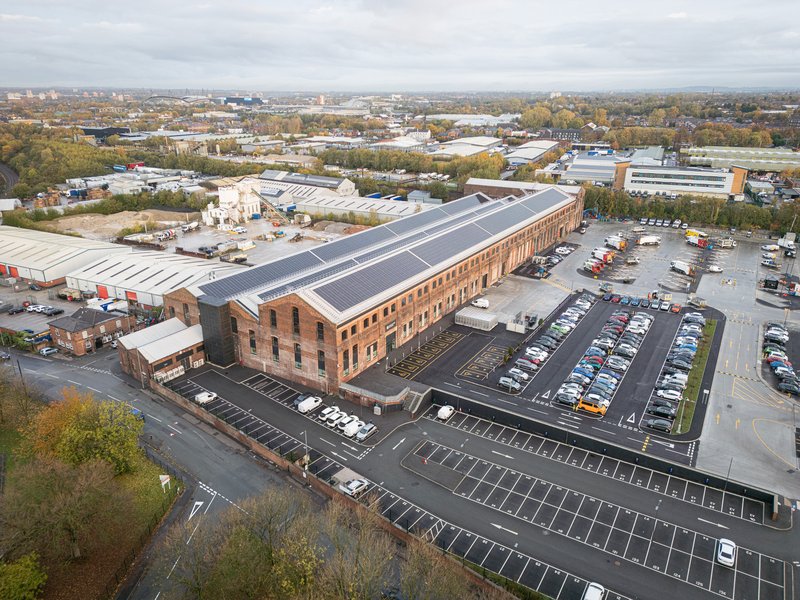
Located off Gorton Lane, the depot was originally used as a locomotive shed by Beyer, Peacock & Co from 1854 to 1966. The structure, though not formally listed, carries historical significance and stood at risk of further decay. The multi-phase refurbishment undertaken by Morgan Sindall has preserved heritage while repurposing the building for modern operational use.
The redeveloped facility now accommodates Manchester City Council services such as Housing Compliance & Enforcement, Environmental Protection, Waste & Recycling, Elections and Licensing. The site also supports Biffa’s refuse operations, including 27 new electric vehicles, with associated maintenance and operations facilities.
To mark this latest key stage of the project, Morgan Sindall has released a short video featuring Councillor Julie Reid and Head of Major Projects Barney Harle, both from Manchester City Council. In the video, the pair discuss the importance of the depot to Greater Manchester and describe the pride in overcoming the complex challenges – and rewards - of a heritage repurposing project.
Phase Three built on the success of earlier phases:
- Phase One began in March 2022 and involved demolition and structural alterations, retrofitting the main building: brickwork restoration, roof and window replacement, and the installation of cathodic protection to preserve over 700 m³ of the original steel structure.
- Phase Two focused on completing internal fit-out, new utility connections, commissioning of building life safety systems, and assisting with the full Furniture, Fixtures, and Equipment (FF&E) fit out to allow the facility to be fully operational in line with the client’s needs. A new gate house with access controls was built to allow the site to operate 24/7 together with a new bin store facility within the old 'plating shed E'.
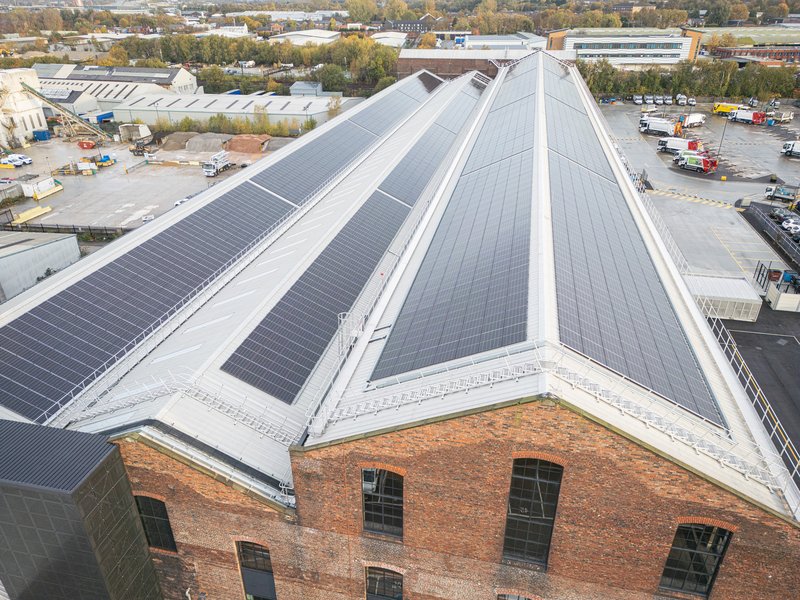
Phase Three involved the completion of all external works, delivered in three carefully planned sections to ensure ongoing operations were maintained throughout. The scope included the installation of rainwater harvesting tanks to supply the new vehicle wash, drainage and infrastructure works, RCV and operational vehicle parking, staff parking, EV charging facilities, landscaping, and underground utilities. A rooftop solar array comprising 2,000 panels was also integrated to help reduce carbon emissions and operational costs. The works were meticulously phased and managed on a day-by-day basis to maintain uninterrupted access for waste management operations—demonstrating the team’s strong commitment to collaboration, safety, and operational continuity.

Morgan Sindall delivered the project using its Intelligent Solutions approach - leveraging digital tools, offsite methods, and sustainability innovations to maximise value.
Morgan Sindall embedded its Social Value Plan at the heart of the Hammerstone Road project, using it as a key tool to drive employment, skills development, and community benefits across Manchester. All outcomes were monitored through the Social Value Portal in line with North West Construction Hub requirements, ensuring transparent, data-driven reporting. The project delivered more than £25 million in social value - representing an impressive 81 percent return on investment for Manchester City Council.
The refurbishment also served as a living classroom, offering real-world learning experiences for students and professionals. Partnerships with the University of Salford and Salford City College generated over 190 hours of educational engagement through site visits, lectures, and applied problem-solving. Four T Level placements were delivered through The Manchester College, while seven-degree apprentices - four with Morgan Sindall and three through supply chain partner Adana - gained valuable on-site experience.
Sustainability extended beyond the building itself. A circular economy approach saw 62 tonnes of scrap metal repurposed through waste partner EMR, raising £7,321 for local reforestation charity City of Trees. Materials such as timber and hardcore were reclaimed and reused wherever possible, and an £80,000 temporary marquee - originally used for bin storage - was donated to a local scout group at project completion.
Other key sustainability features include:
- A 2,000-panel solar installation which is expected to reduce carbon emissions by approximately 170 tonnes annually.
- A rainwater harvesting system which is projected to capture up to 10 million litres per year, saving an estimated £27,000 in operational costs.
- The use of retrofit, which preserved large portions of the original structure through cathodic protection systems that mitigate steel corrosion, avoiding full replacement.
Throughout the contract, the team maintained an open, collaborative relationship with Manchester City Council, holding weekly meetings, adapting to evolving needs, and enabling enhancements such as the addition of solar energy despite these not being in the original baseline.
The refurbished facility now operates as a multi-tenant hub: Council services, Biffa’s refuse operations, maintenance, and administrative functions coexist under one roof. The facility also includes a dedicated bin store and maintenance workshop for wheelie bins.
Steven Gregory, North West area director, Morgan Sindall Construction said:
We’re incredibly proud to have played a part in the transformation of this historic site. Hammerstone Road has been part of Manchester’s industrial story for generations, and it’s fantastic to see it repurposed and brought back to life in a way that both honours its heritage and supports the city’s future ambitions.
Our approach has focused on breathing new life into existing assets, combining technical expertise in complex refurbishment with a strong commitment to sustainability and social value. Working alongside Manchester City Council has been a genuine partnership from start to finish, and the result is a facility that reflects Manchester’s ability to adapt and innovate while setting a benchmark for low-carbon, future-ready infrastructure. It’s a project that really captures the spirit of the city - proud of its past, ambitious about its future.”
Partners on the project included Fletcher Rae (Architect), Curtins (Structural) and Hannans (M&E).
ENDS