
CarboniCa gains RICS validation as Morgan Sindall works with industry partners to democratise carbon reduction
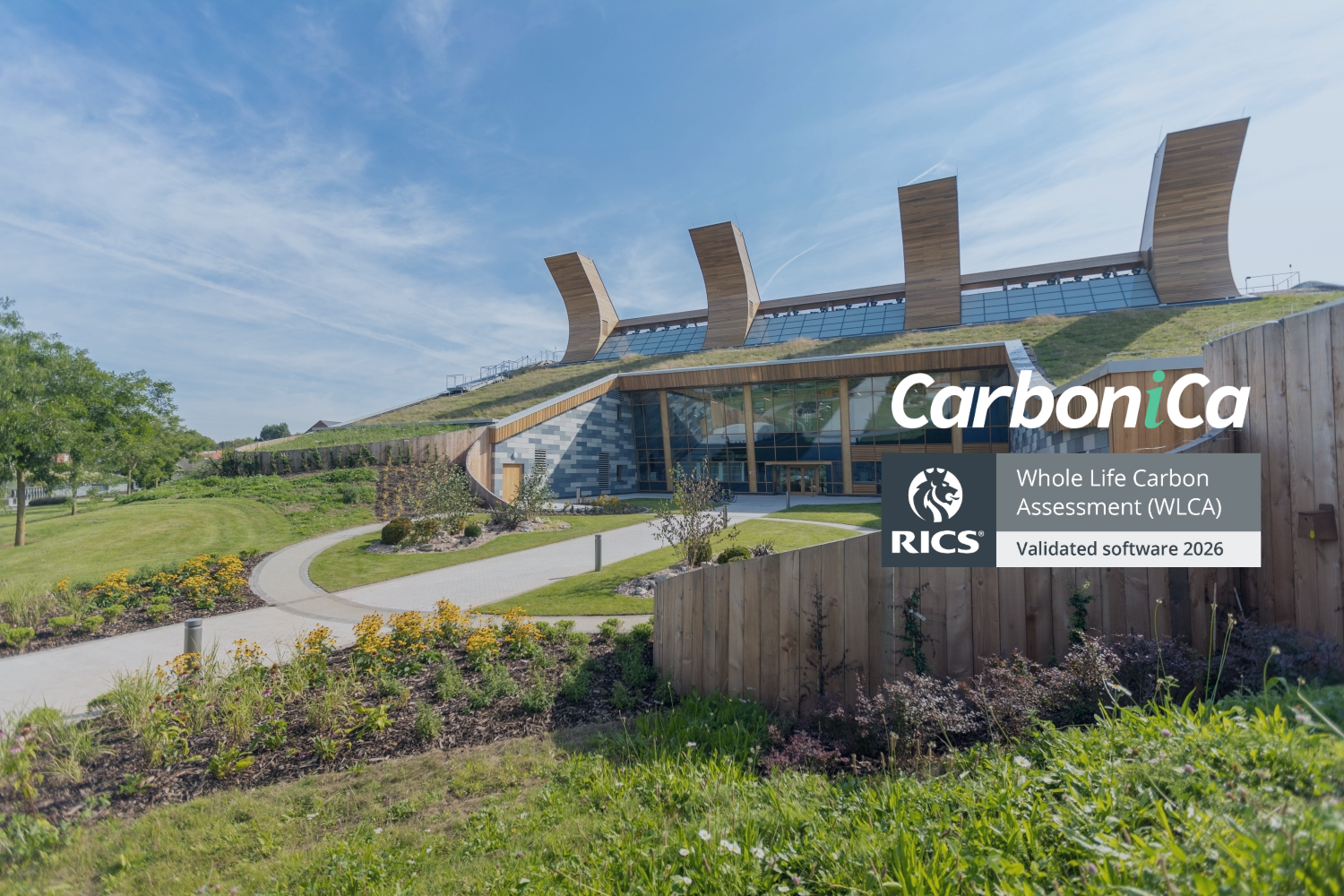
The Royal Institution of Chartered Surveyors (RICS) has validated CarboniCa, the whole life carbon measurement and reduction system pioneered by Morgan Sindall Group, against the second edition of its Whole Life Carbon Assessment (WLCA) for the Built Environment professional standard.
CarboniCa is a cloud-based software system that identifies building elements likely to result in higher carbon emissions and suggests lower-carbon alternatives for clients, designers and supply chains. By enabling low-carbon decisions based on robust, meaningful data, it simplifies an assessment process that has traditionally required significant specialist resource.
The RICS standard is the benchmark for credible whole life carbon assessment across the built environment, and validation involves rigorous checks against both mandatory and optional requirements. The accreditation follows third party verification by Anthesis Group in February 2025, and it is external confirmation of a methodology Morgan Sindall has been developing since 2017.
The validation arrives as contractors come under growing pressure to evidence the carbon in what they build, not simply report it. Operational energy has been governed by Building Regulations for decades, but embodied carbon is still handled project by project, with no single yardstick. That is changing. The UK Net Zero Carbon Buildings Standard, launched in March 2026, and continuing work on Part Z both point to a market that will expect carbon evidence to be consistent and auditable. Clients are already asking for it, weighing embodied carbon limits alongside cost, quality and programme, and looking for proof of how carbon has been measured, managed and reduced.
Tim Clement, Director of Social Value and Sustainability at Morgan Sindall, said:
RICS validation matters because it puts CarboniCa’s methodology on the same footing as industry best practice. That gives the numbers coming out of the tool a credibility and robustness that clients, designers and supply chain partners can rely on. It’s certainly a proud moment for our team – not least as this is the first tool validated for both buildings and infrastructure, and reflects our long term commitment to innovation.
Inconsistent methods and unclear assumptions are genuine problems in whole life carbon assessment, and they make it very hard to compare options or trust the answer. Take those out and you have a sound basis for decisions, which is what turns carbon measurement into real reduction. That has been our aim from the start: CarboniCa is a reduction tool, not just a measurement one.”
Anil Sawhney, Head of Sustainability, Data and Technology, at RICS said:
Our award-winning Whole Life Carbon Assessment Professional Standard is used globally to measure and report carbon emissions across the built environment. The RICS WLCA Software Validation Programme helps ensure that carbon assessment software aligns with the requirements of the standard. We are pleased to announce that CarboniCa has been validated against the RICS Whole Life Carbon Assessment for the Built Environment Professional Standard (2nd edition). As demand for consistent and transparent carbon data grows, software validation helps build confidence in whole life carbon assessments and supports more consistent reporting across the sector.”
Morgan Sindall began work on CarboniCa in 2017, at the same time as the Group set its science-based targets, as the first UK contractor to do so. It started life as an excel-based tool before becoming a secure web application, launched in May 2022. It has since been used on more than 800 projects across the Group, ranging from schools to office fit outs, to energy infrastructure.
Throughout, development has been governed by four founding principles: the tool must be robust, credible, easy to use, and focused on reduction rather than measurement alone. Those principles have kept the system useful for carbon specialists while remaining accessible to the project teams and supply chain partners who have to make lower-carbon choices in practice, under the familiar pressures of tight budgets, stretched programmes and complex supply chains.
That purpose can be seen in Morgan Sindall Construction’s 10 Tonne Carbon Challenge, which since 2021 has encouraged project teams and supply chain partners to identify carbon savings of at least 10 tonnes on individual projects and evidence them with quantified case studies, underpinned by the whole life carbon assessment in CarboniCa. Savings now total 71,490 tonnes of CO2e, equivalent to the annual emissions from heating around 32,495 UK homes.
The RICS validation also comes as Morgan Sindall continues to work with industry partners to improve the way whole life carbon is measured and reported.
The business is a key industry collaborator on the Coalition for Life Cycle Emissions Alignment and Reporting (CLEAR), launched in April by RICS, the World Business Council for Sustainable Development (WBCSD) and the Global Building Data Initiative (GBDI). CLEAR brings together leading organisations from across the sector to create a more consistent and trusted approach to whole life carbon assessment, improve confidence in carbon data and support faster progress towards decarbonisation targets.
By bringing the perspective of a Tier 1 contractor, Morgan Sindall is helping to ensure future approaches reflect the way projects are actually delivered, from early design choices and procurement decisions through to construction sequencing and supply chain engagement.
The next stage in CarboniCa’s journey is already well under way. In 2025, Morgan Sindall partnered with Once For All, a European leader in supply chain management for the built environment, to redevelop the tool from the ground up, so it can grow from a bespoke in-house platform into one suitable for the whole construction industry.
Launching in 2027, the Once For All rebuild aims to democratise carbon reduction by automating data entry through AI and integrating with existing estimating and modelling tools, significantly expanding the database of carbon conversion factors, and providing real-time material optioneering that works for end users. The rebuild will stay true to CarboniCa’s founding principles while drawing on insights from industry expert groups, becoming a WLCA platform built by industry, for industry, to stand the test of time.
ENDS
For further information, please contact Chris Hulme 07971 350116 [email protected]
1. CarboniCa is listed on the RICS WLCA software validation page
https://www.rics.org/wlca
RICS whole life carbon assessment software validation.
2. More on CLEAR: rics.org/news-insights/current-topics-campaigns/sustainability/clear
3. More on the 10 Tonne Carbon Challenge: morgansindallconstruction.com/news/blog-the-10-tonne-carbon-challenge-has-morgan-sindall-met-its-50000-tonne-carbon-target/
4. The second edition of the RICS WLCA professional standard introduced revised assumptions for design life, material composition and transport distances; standardised reporting templates for buildings and infrastructure assets; a data uncertainty factor calculation method; new life cycle modules and sub-modules with revised calculation logic; a revised dataset for wastage rates and end of life scenarios; and an expanded list of mandatory assessment details and normalisation units.
5. Around 25% of the UK’s total carbon emissions are linked to the built environment, and materials such as steel and cement account for around 15% of global carbon emissions.