


Hertfordshire school celebrates national sustainability first
An event has been held to celebrate Hertfordshire’s Buntingford First School becoming the first school in England that is net zero carbon in both construction and operation to achieve Passivhaus certification.
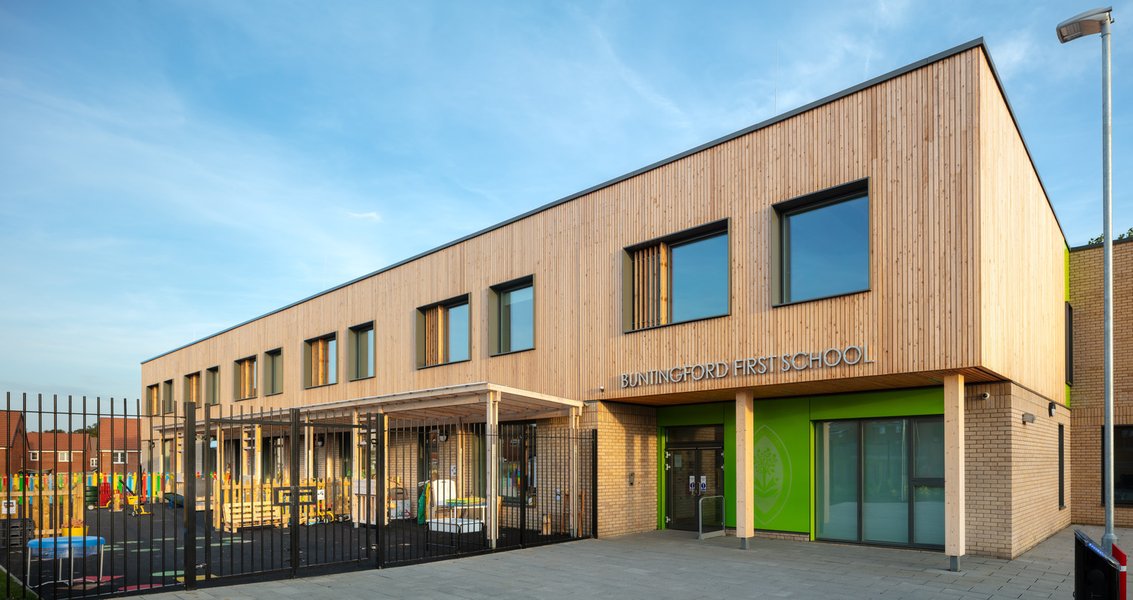
The 330-pupil facility, which opened its doors in September 2023, was created by Morgan Sindall Construction’s Northern Home Counties business following its appointment by Hertfordshire County Council (HCC). The project was procured via the Pagabo framework. The school has ten classrooms as well as a nursery and rooftop outdoor spaces. It has been built in line with HCC’s sustainability strategy and ambition to be carbon neutral by 2030.

Buntingford First School’s sustainability success is thanks to design and construction choices that significantly reduced the project’s embodied carbon levels while creating a highly efficient building with renewable energy and heating sources.
The school won the Constructing Excellence award for Climate Action in 2024 and now the Passivhaus Trust has announced that the building meets its demanding criteria for net zero buildings.
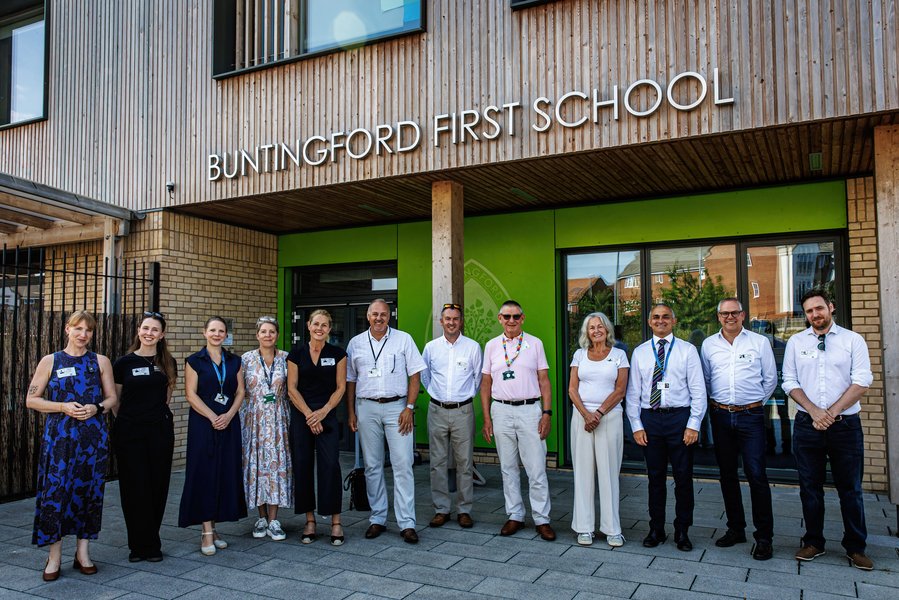
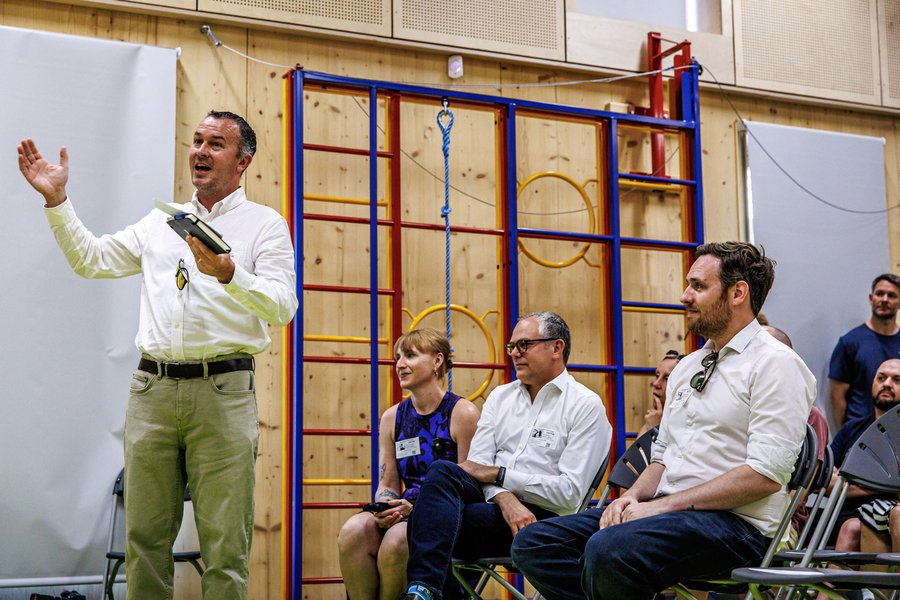
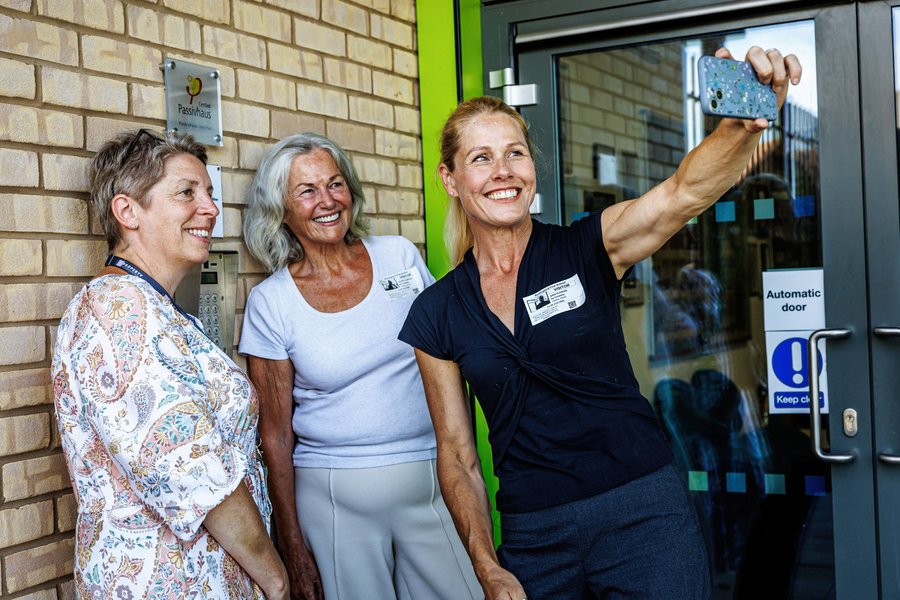
To commemorate this accreditation, a ceremony was held on 26th June to unveil a plaque marking the school’s Passivhaus status. Teachers, pupils, and parents, joined Cllr Adrian England and Cllr Mark Watkins alongside representatives from HCC, Morgan Sindall, and Holmes Miller architects at the event, during which speeches discussed the school’s sustainable nature and how this aligns with its green curriculum. The school’s pupil-led Eco Council shared what sustainability means to them and 175 of the school’s students planted their own sunflowers and wildflowers to celebrate the moment.

Designing a sustainable school
Industry-leading technologies and techniques were employed to reduce the school’s carbon footprint throughout construction. This included using the digital carbon monitoring tool, CarboniCa, which calculates and informs how design and construction decisions will impact the carbon output. This resulted in a school that beat the Low Energy Transformation Initiative’s (LETI) embodied carbon target of 600kg of CO2 per sq. m by 50%.
Since opening, the school has been regularly evaluated to check its sustainability performance in operation. In its first year, the building recorded an energy usage rate of 39.44 kWh/m2 per year, which was more than 20 kWh/m2 per year lower than the LETI target. In fact, between September 2024 and December 2025, the buildings operational carbon and energy use was negative, so it produced more electricity than it consumed as 11.7 kg of CO2 was saved.
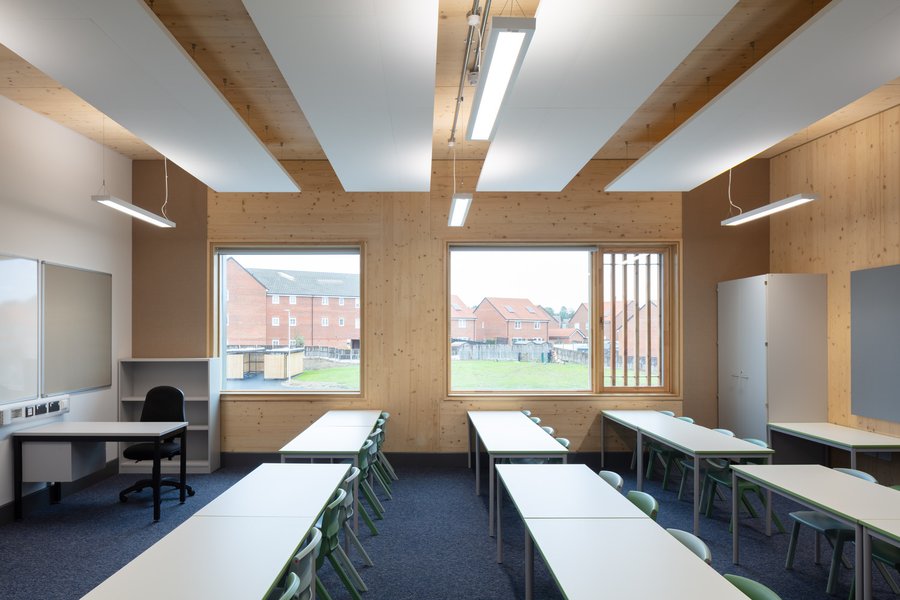
Installing a cross laminated timber (CLT) frame saved two tonnes of carbon for every metre cubed used. On completion, the frame saved 1,160 tonnes of carbon and reduced construction traffic by 90%, which led to carbon savings of 20%.
Other sustainable design choices included the innovative use of recycled materials, including using recycled pipework for piled foundations, and 70% recycled aggregate in the substructure’s concrete. By reducing concrete, the project saved approximately 200 tonnes of CO2. 50% of Ground Granulated Blast Slag (GGBS) was used in the foundation – one tonne of which reduces embodied CO2 by approximately 90kg while increasing the concrete’s durability.
The school’s renewable energy strategy included installing 184 PV panels and air source heat pumps, enabling the school to operate without reliance on fossil fuels. Triple glazed windows, highly efficient Mechanical, Electrical, and Plumbing (MEP) systems, and Passive Infrared Sensor (PIR) lighting have also been utilised to boost energy efficiency levels.
An operational energy consumption of 67 kWh/m² per year was targeted and monitored throughout the design process. This approach led to improved U-values (below 0.1 W/m²K), enhanced airtightness (below 0.6 air changes per hour), and the complete elimination of thermal bridging in the façade.
Other innovative design choices included cutting down on hot water sinks in classrooms where they weren’t required. This reduced pipework, hot water use, and overheating, supporting a more balanced energy usage across the site. The project team tracked deliveries and staff to accurately measure the development’s carbon footprint and Hydrotreated Vegetable Oil (HVO) was used on site instead of diesel, saving 82 tonnes of CO2.
Creating pupil comfort
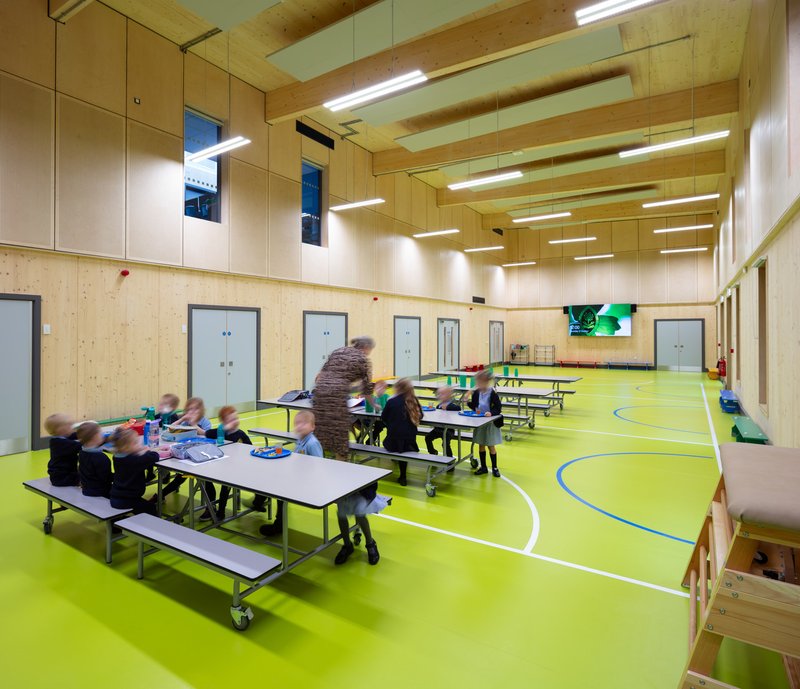
All the teaching spaces look north to avoid south-facing windows that can cause rooms to overheat, and classrooms are located on the upper floors. Social areas such as the dining halls and common rooms are south facing to encourage a well-lit, active environment while saving on heating costs. These decisions all contributed to improving the building’s energy efficiency.
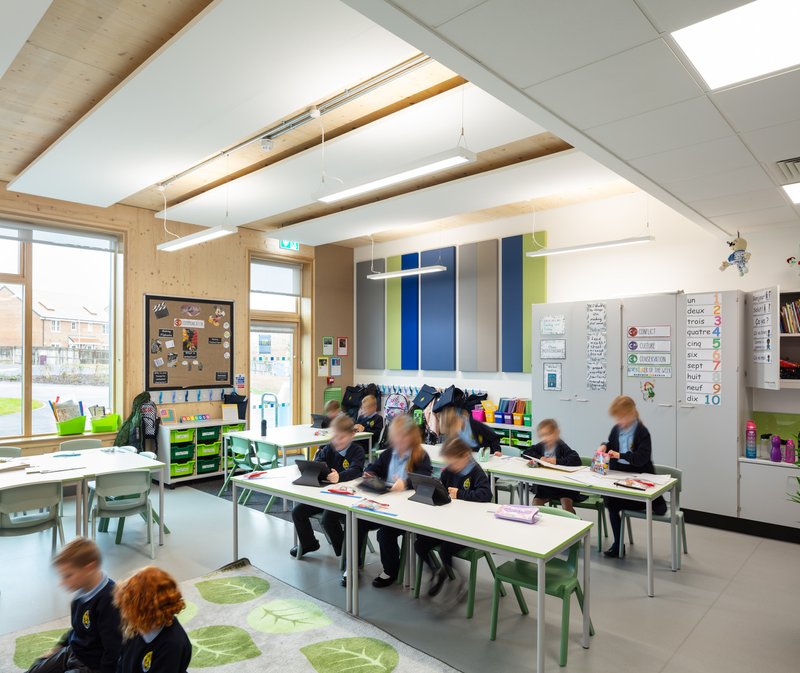
Pupil comfort was carefully considered in the school’s design, which saw the use of natural materials to reduce anxiety, the mitigation of VOC’s and Formaldehyde to improve air quality, and a focus on views of nature, natural daylight and ventilation, to create a calming space.
Even during heatwaves, the school’s design facilitates an effective teaching environment, as the building’s plant provides peak lopping, which prevents the school from going much over 26°C. This works by the building harnessing energy generated by the Photovoltaic panels and uses it to cool incoming air by drawing it across cooling coils in the ventilation plant.
Buntingford First School has a nurturing ethos and a child-centred approach which enables all children to achieve well from their starting points. The school's innovative and creative curriculum stems from this iconic building. 'Conservation' is one of the 4Cs that the school's curriculum is built upon, and Education for Social Responsibility (ESR) is an integral part of the children's learning at Buntingford First School. The school believes wholeheartedly in preparing the school’s children for the future and enabling them to flourish in an ever-changing world.
'Personal Development and Wellbeing' was graded as 'Strong' in the school's recent Ofsted report and they noted, "as a result of the highly effective personal development programme, pupils have very secure knowledge about a range of topics, including different cultures, sustainability, online safety and conservation. These experiences set pupils up well to become responsible citizens and to respect the world around them.”
Emma Curtis, Area Director for Morgan Sindall Construction in the Northern Home Counties, said:
Buntingford First School receiving Passivhaus certification marks an important milestone in how we think about school design and construction. Being fully net zero carbon and Passivhaus certified means it shines a spotlight on what can be achieved when sustainability and pupil needs are placed front and centre right from the start.
Thanks to the close collaboration from an early stage between Hertfordshire County Council, Scholars Education Trust, and our team, Buntingford First School provides a blueprint for creating carbon neutral, high-quality educational environments not only in Hertfordshire, but right across the UK. It is evidence that with the right vision, team and strategy, outstanding results can be achieved.”
Vikki Johnston, Headteacher at Buntingford First School, said:
We are immensely proud that our community has achieved Passivhaus certification. This milestone is far more than a building standard; it is a daily experience for our children. They learn in classrooms filled with fresh air, comfort, and natural light, which supports their concentration, wellbeing and curiosity. Our pupils also gain a powerful understanding of sustainability, seeing first-hand how thoughtful design protects our planet. This achievement inspires them to think boldly about their future and their responsibility to care for the world around them, beginning here in our school, for generations to come together.
Our curriculum has been thoughtfully shaped by the building itself. We have embedded Education for Social Responsibility at its heart, with a golden thread of ‘Conservation’ woven throughout the school. This ensures our children not only learn about the world, but understand their role in sustaining and protecting it.
At Scholars' Education Trust, we are also deeply grateful to have worked alongside such inspiring and innovative professionals throughout the construction and delivery of our school. Their vision, expertise and shared commitment have made this achievement possible, creating a truly exceptional environment for our children to learn and thrive."
Cllr Adrian England, Executive Member for Sustainability at Hertfordshire County Council, said:
Buntingford First School is a shining example of how we are turning our sustainability ambitions into reality. Achieving Passivhaus certification as a fully net zero carbon school is a significant milestone, not just for Hertfordshire, but nationally.
This project shows that we can meet the needs of our growing communities while tackling climate change head on, creating high-quality learning environments that support both pupil wellbeing and educational outcomes.
We want Hertfordshire to be a leader in sustainable development, and this school shows how we can support growth in a responsible, forward-thinking way. I’m incredibly proud of the work that has gone into making this vision a reality and of the positive legacy it will leave for future generations.”
ENDS