


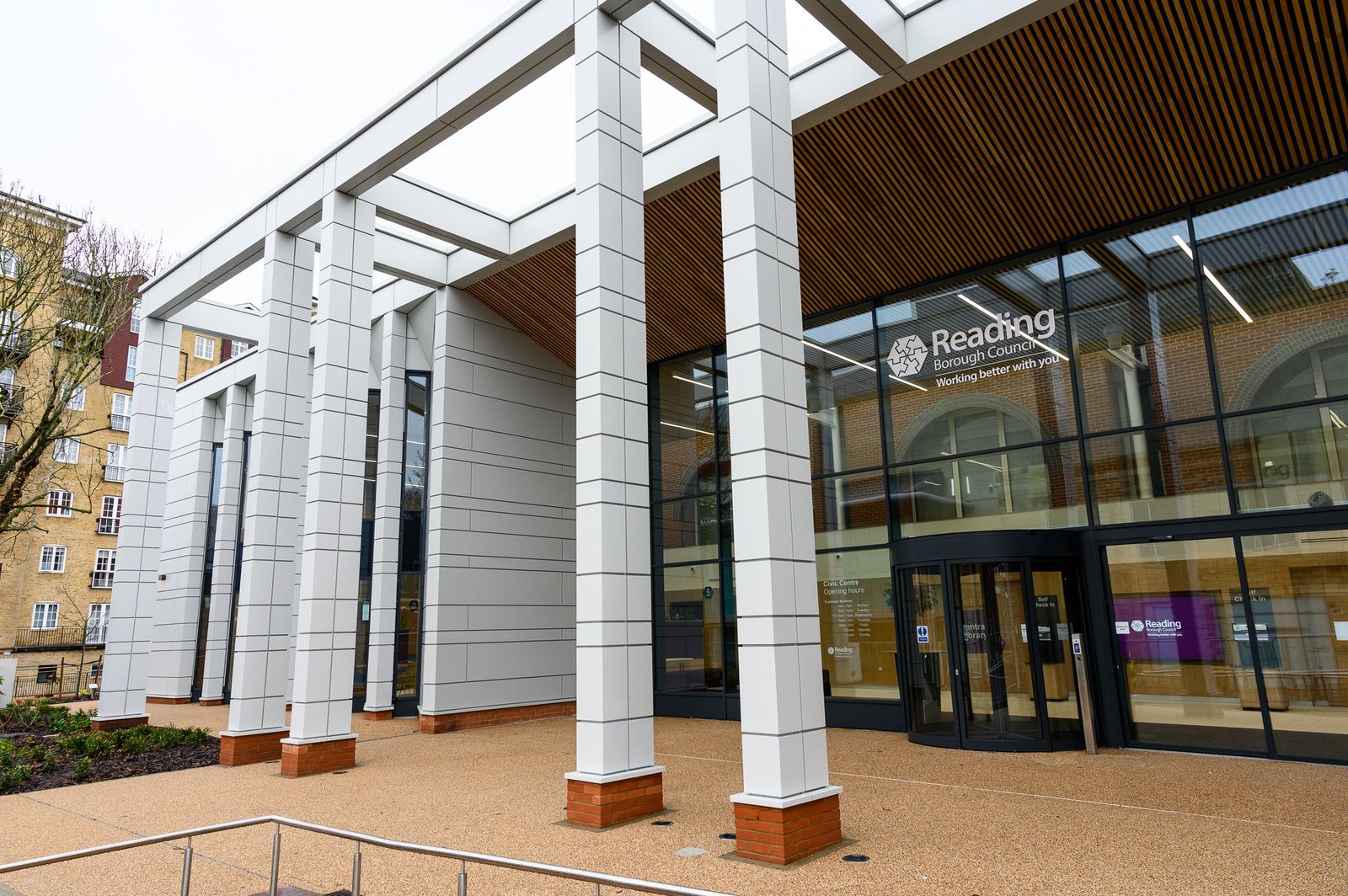
Reading Central Library Relocation
Reading Central Library has long served its community from its Kings Road site since the mid-1980s. Over time, however, the building outgrew its original purpose and no longer met the expectations of a modern public facility. A fragmented internal layout and recessed entrances reduced its civic presence and began to impact the overall user experience.
By 2021, Reading Borough Council recognised that incremental upgrades would not be sufficient, requiring a comprehensive transformation to create a welcoming, functional and future-ready community building.
Key Stats
- New civic extension & refurbishment of existing offices to deliver library
- Delivered within a live, occupied building
- BREEAM Very Good
- CCS Score: 45/45
- 100% waste diverted from landfill
- 321 pupils engaged through STEM activities
- 97 volunteering hours delivered
- £2,750 invested in community initiatives
At a Glance

Budget
£10.7m

Completion
April 2026

Location
Reading

Framework
Westworks Framework

Sector
Community/Leisure

Social value
£10.4 million

Sustainability
100% Waste Diverted from Landfill
Reimagining the Civic Experience
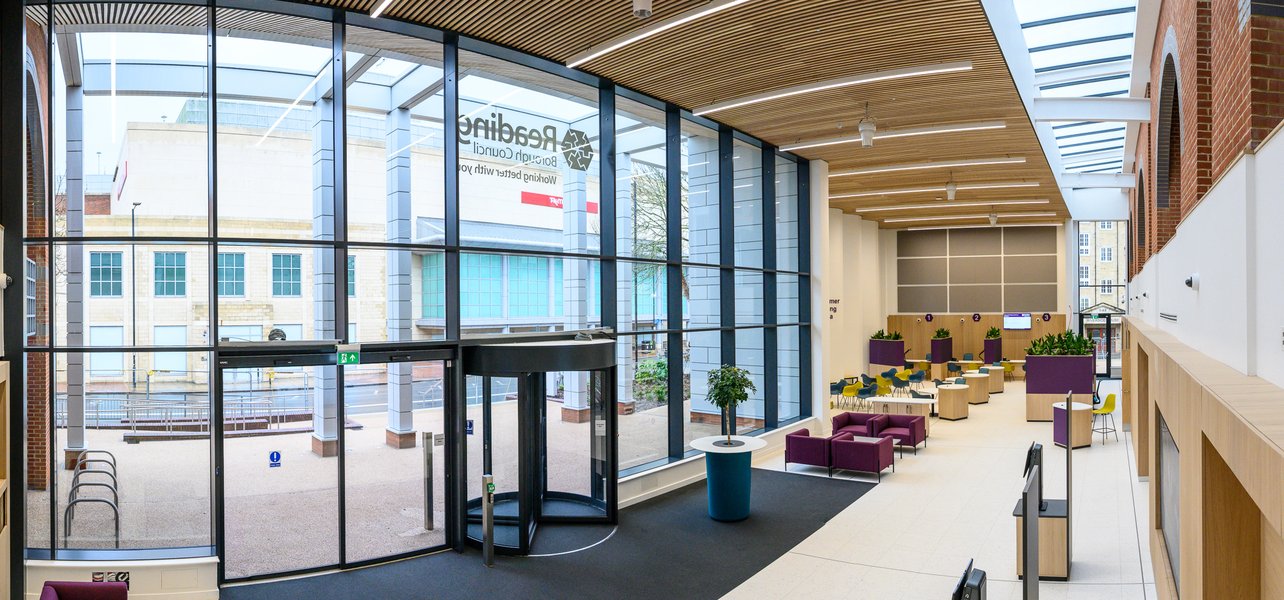
Rather than pursuing a standalone refurbishment, Reading Borough Council adopted a more strategic approach. A detailed options appraisal considered multiple scenarios, from upgrading the existing facility to a full relocation. Ultimately, the preferred solution was to relocate the library into the existing Civic Offices on Bridge Street, unlocking the scale, connectivity and flexibility required for its long-term transformation.
By co-locating services within a single civic hub, the Council not only enhanced operational efficiency but also revitalised the town’s cultural offer, creating a multi-functional facility for the community.
As the civic offices remained operational throughout construction, the works were delivered in two phases:
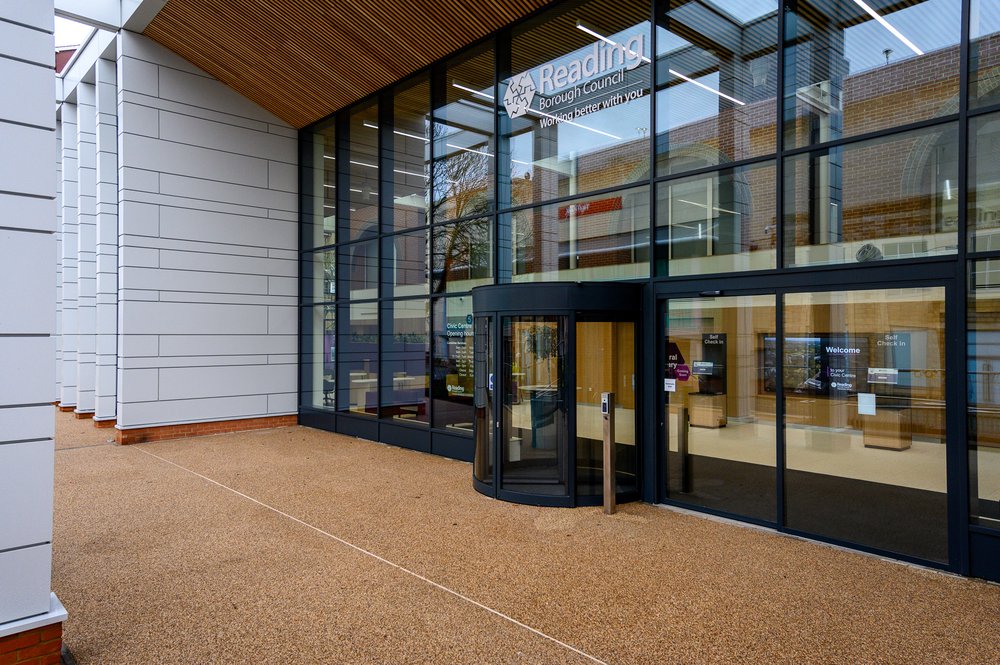
- Phase One focused on decarbonisation and redefining the existing Civic Centre’s arrival experience. Completed in January 2026, this phase introduced a double-height atrium and a new entrance with revolving doors, alongside a modernised reception area equipped with digital check-in technology.
- Phase Two realised the full transformation, with delivery of the new library environment, improved accessibility, and a dedicated children’s library.
Delivering in a Live Environment
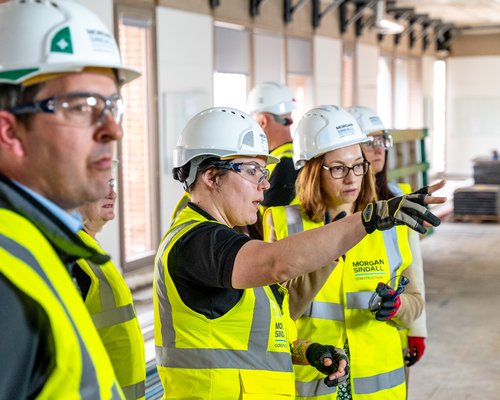
Procured through the Westworks framework, delivering a transformation of this scale within a fully operational civic building required a highly coordinated approach. Close collaboration between the Council, project team and supply chain ensured activities were sequenced around occupied areas, maintaining safe and continuous access routes throughout. Regular communication with all stakeholders also helped minimise disruption where possible.
A range of technical and logistical challenges, including fire compartmentation upgrades, complex structural interventions, and the management of temporary traffic and access arrangements along Bridge Street, were successfully managed through continuous programme review and input from our specialist subcontractors.
A Clear and Welcoming Point of Arrival
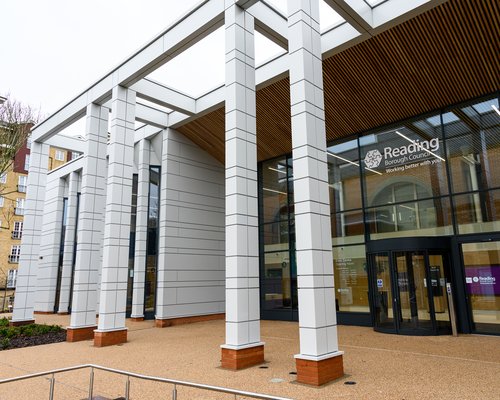
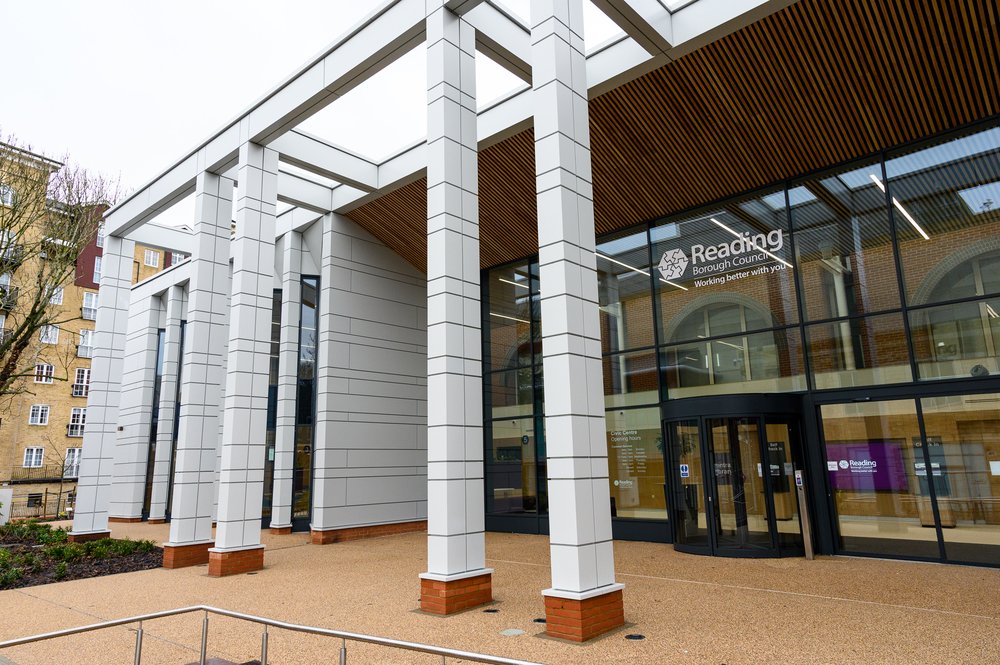
Creating a welcoming civic entrance was a key objective for the Council, with improvements to the library’s point of arrival designed to enhance accessibility and the overall visitor experience. To achieve this, a new extension has been introduced at the south-east corner of the Civic Centre. A reconfigured façade and colonnade enhance visibility and openness, while a single, centralised entrance simplifies access, improves wayfinding and creates a more intuitive arrival experience for visitors.
The building’s internal arrangement has been reconfigured to provide greater clarity and operational efficiency. Distinct zones for Customer Services, Registrars and the library support independent operation of each function, while strong physical and visual connections ensure an integrated civic destination.
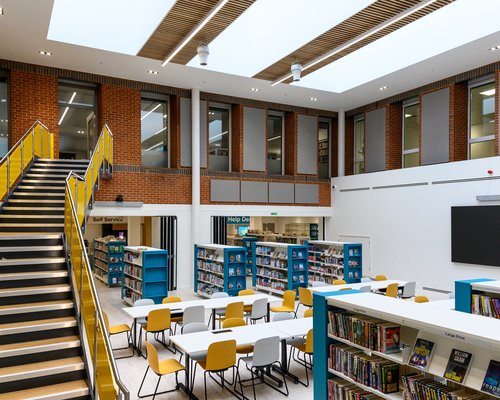
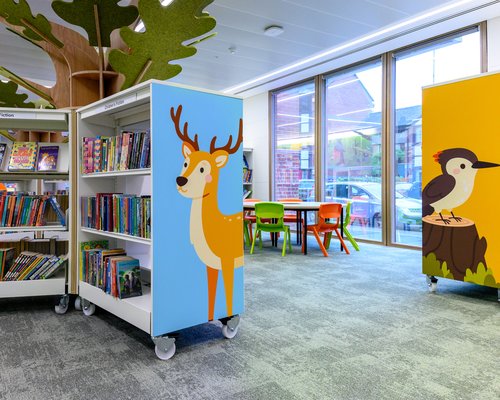


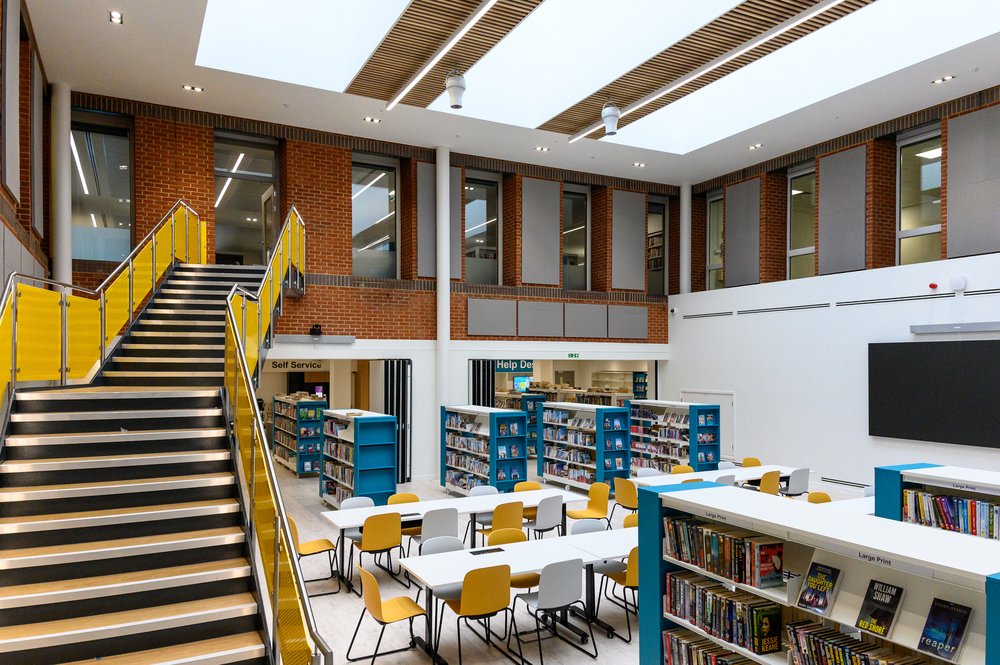
At the heart of the project, a previously underutilised courtyard has been enclosed and transformed into a double-height library space, set beneath a glazed roof. This light-filled central volume creates a focal point within the building, enhancing the quality of the internal environment whilst providing flexibility for future adaptation. A new staircase strengthens visual connections and circulation routes.
Lastly, enhancements extend to secondary spaces, where a corridor linking to the democratic areas has been reimagined as a public gallery. This has enabled opportunities for exhibitions and informal interaction, reinforcing the building’s civic role.
Building Sustainably for the Future
Sustainability has been a defining thread throughout the project. Rather than demolish and rebuild, the decision to repurpose the existing Civic Offices significantly reduces embodied carbon.
Alongside this, a dedicated decarbonisation phase significantly improved the building’s environmental performance. Gas-fired systems were replaced with air source heat pumps, while enhancements to airtightness, ventilation and building controls ensure energy is used more efficiently, particularly during quieter periods when only parts of the building - such as the library - are in use.
The project is targeting a BREEAM ‘Very Good’ rating, supported by measures including enhanced cycle facilities, improved recycling infrastructure and increased tree planting. Even the architectural language reflects longevity, with robust, durable materials selected to ensure the building performs for decades to come.
Creating Lasting Social Value
From the outset, the project placed a strong emphasis on creating meaningful opportunities for local people, resulting in 11 new jobs, 8 apprenticeships and over 200 apprentice weeks.
This commitment was underpinned by a proactive approach to community engagement. Working closely with local schools and education providers, the team delivered 14 careers and advice events, alongside 104 hours of STEM engagement, reaching 321 individuals through curriculum-based activities. In addition, 97 volunteering hours were contributed to support local initiatives.
A focus on local economic growth further strengthened this impact, with 70% of project spend directed through SME supply chain partners, helping to retain investment within the region and support the resilience of the local economy. Collectively, these initiatives generated more than £10.4 million in social value.
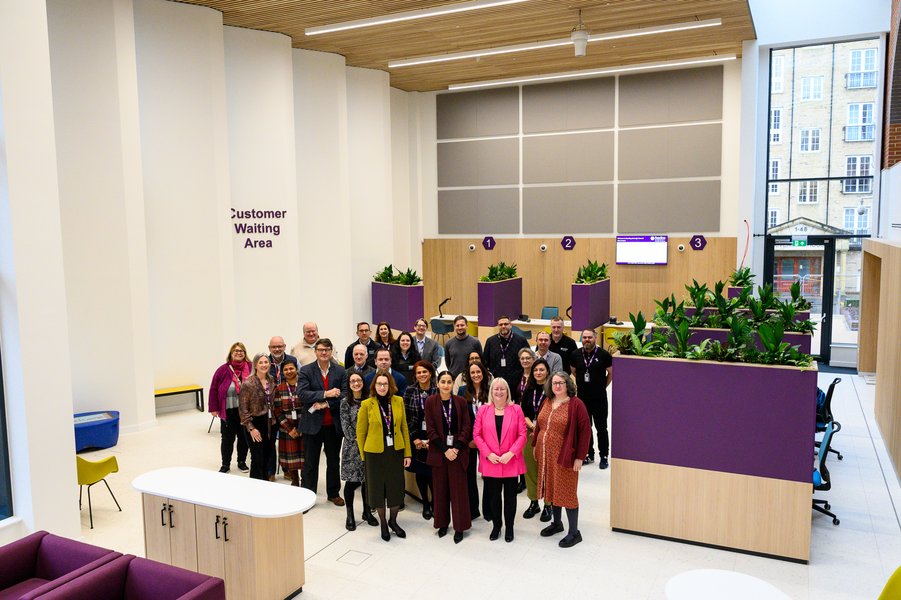
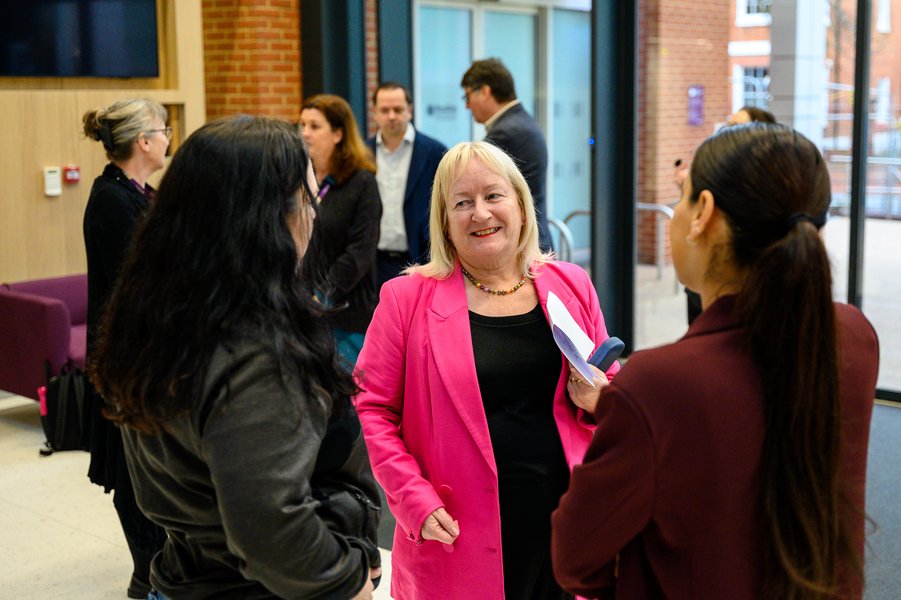
This project represents a landmark investment in Reading’s future, transforming how we use our council estate to deliver modern, inclusive public services. By reimagining space within the Civic Centre, we have created a vibrant, accessible and future ready Customer Service and new Central Library that reflects the needs and ambitions of our community.
The new library is more than just a building, it is a dynamic hub for learning, creativity and connection. With significantly enhanced facilities for children and young people, improved study and digital resources, and flexible spaces for community use, it has been carefully designed to inspire a lifelong love of reading and support residents at every stage of life”
Charan Dhillon, Director Property & Asset Management at Reading Borough Council and Project Director for this delivery
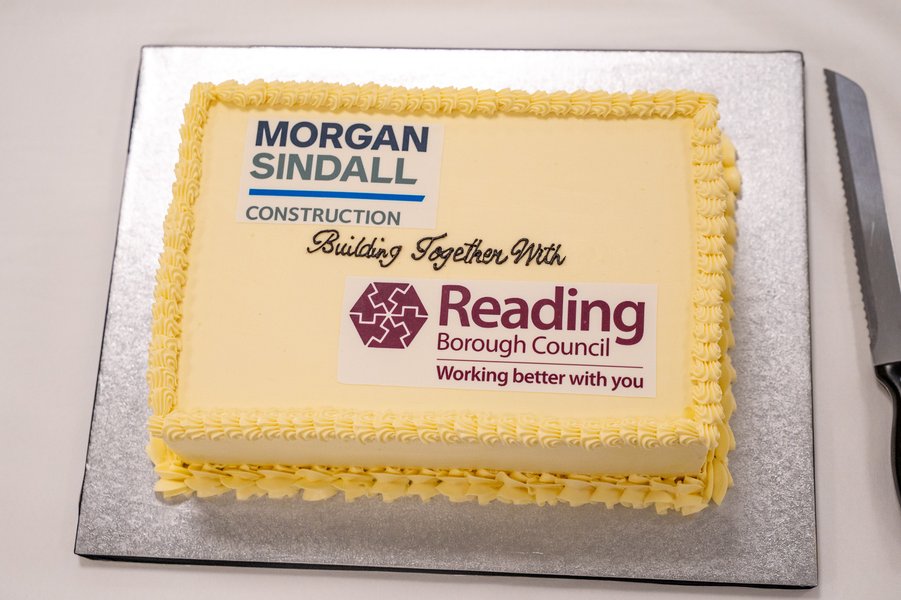
Together, RBC and Morgan Sindall have successfully transformed an ambitious vision into a modern, accessible and welcoming community hub in the heart of the town. We are proud to have played a part in this important project that will benefit residents for years to come.
This partnership is a great example of how procurement can enable more than just compliance, but create a transparent, competitive route to market that enables the right partners to come together and deliver meaningful public value”.
Karina Gent, Head of Operations at Westworks.
Gallery
Related News
NEWS
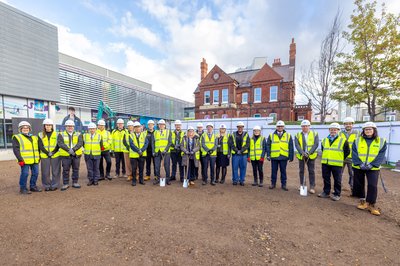
Morgan Sindall breaks ground on £23.1m Student Hub at the University of Portsmouth
Morgan Sindall Construction’s South business has officially broken ground on the £23.1 million refurbishment and extension of the University of Portsmouth’s Student Hub.
NEWS
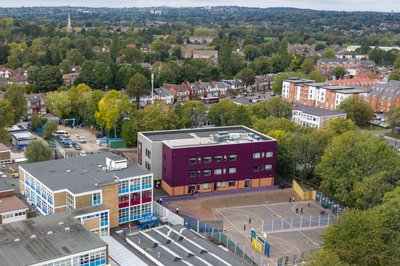
Morgan Sindall delivers expansion at Birmingham SEN School
Morgan Sindall Construction has completed a comprehensive expansion project at Selly Oak Trust School, delivering a state-of-the-art learning environment that will provide modern, specialist facilities for pupils with special …
NEWS
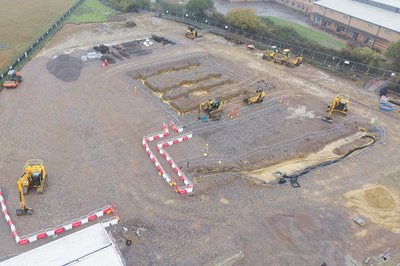
Turf cutting ceremony marks key milestone for Abbeyfield School expansion
The first turf has been cut for construction of the new Abbeyfield School sixth form building in Chippenham, with contractor Morgan Sindall Construction marking the occasion through an official …