

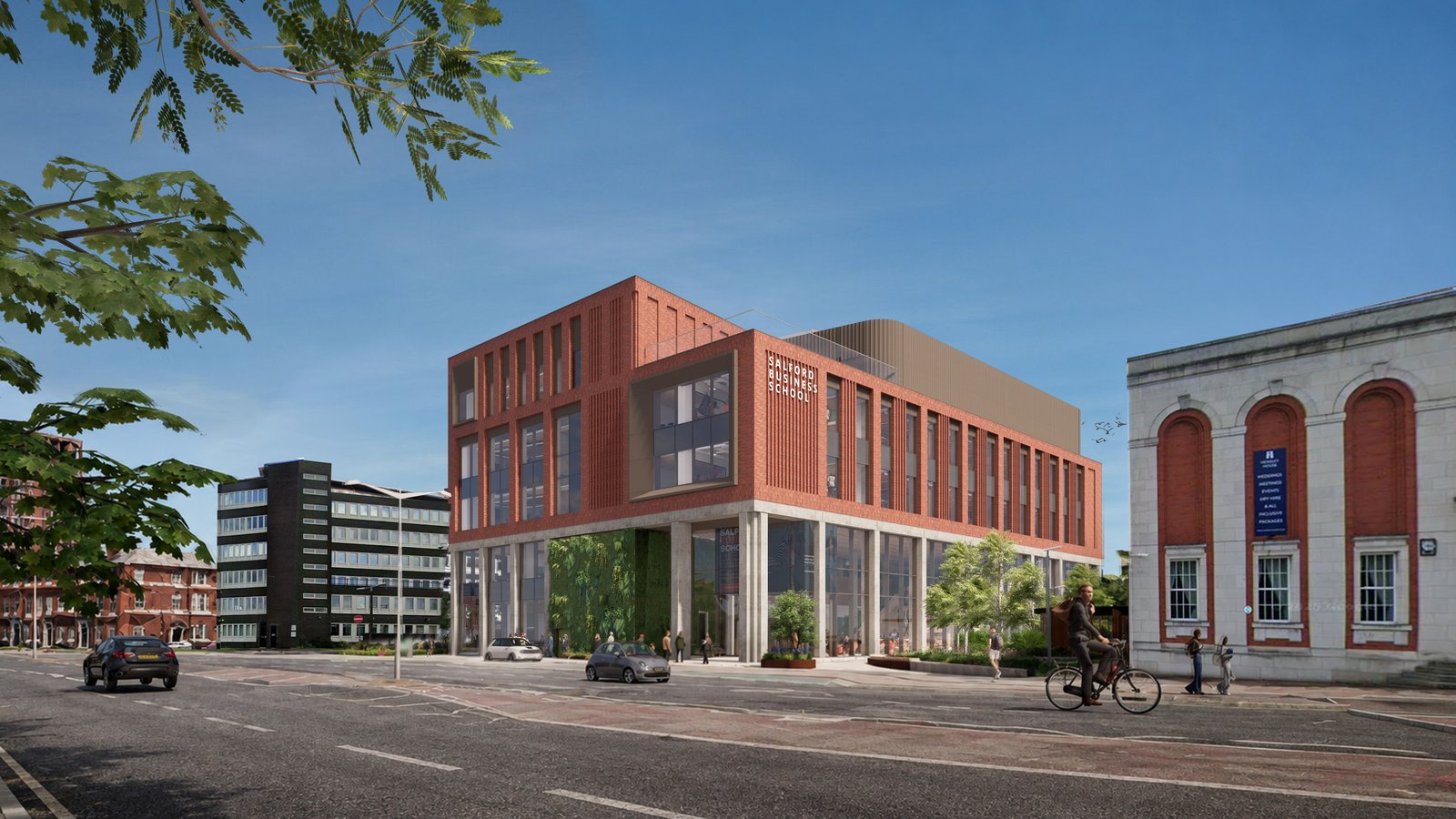
Morgan Sindall Construction selected to deliver new Salford Business School
One of the most significant investments in the University of Salford’s campus estate to date has taken another step forward with Morgan Sindall Construction selected as preferred partner to deliver the new £67.86 million Salford Business School.
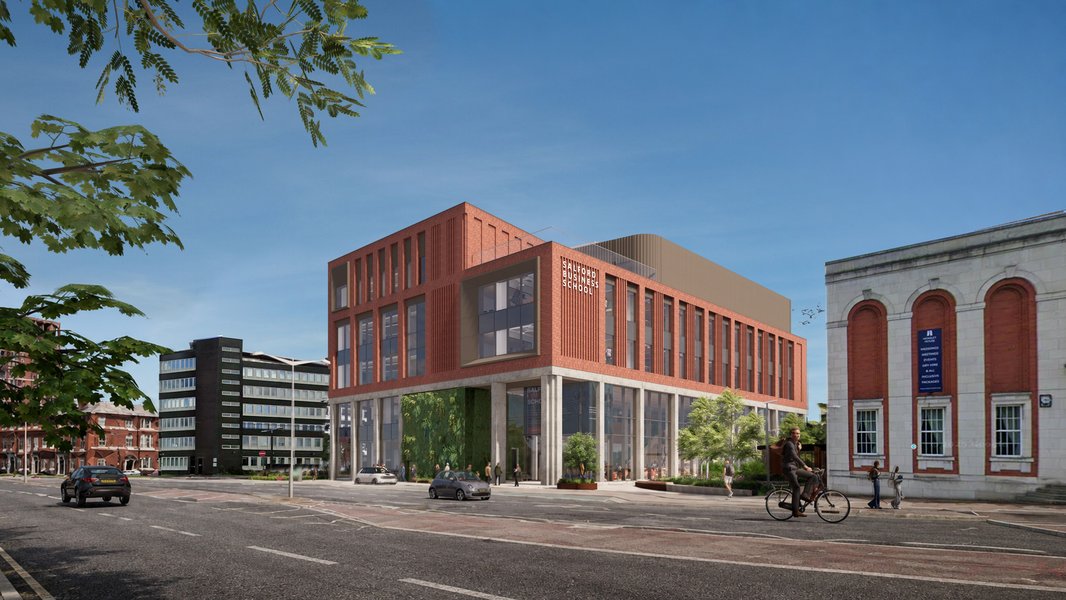
With the planning application submitted, subject to consent, the project will see the demolition of Crescent House at 43-44 The Crescent and the construction of a purpose-built 7,385m² (around 79,500 sq ft) home for the Business School in its place. The scheme also includes new public realm and landscaping around the building.
The new Salford Business School is being funded by the University and delivered as part of the 240-acre Crescent Salford masterplan, led by ECF - the regeneration partnership between Muse, L&G and Homes England’s National Housing Bank - in partnership with Salford City Council and the University of Salford.
Morgan Sindall will now work with the design team through a pre-construction period running until March 2027. If planning consent is secured, work is expected to start on site in April 2027, with completion scheduled for spring 2029.
The new building forms part of the University’s Campus Connectivity Plan, a major redevelopment of its research, teaching and public spaces.
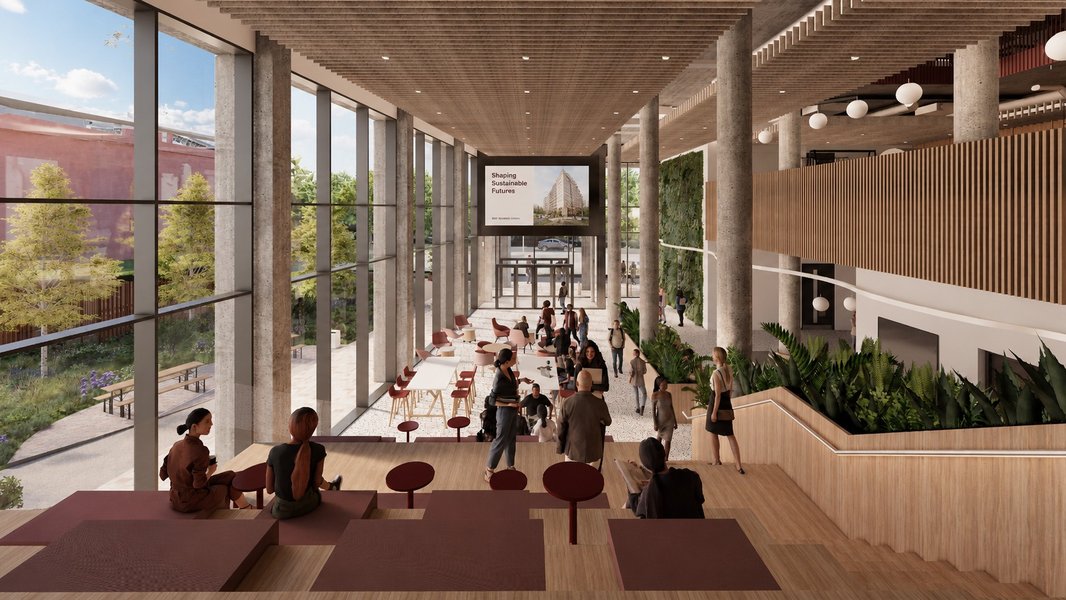
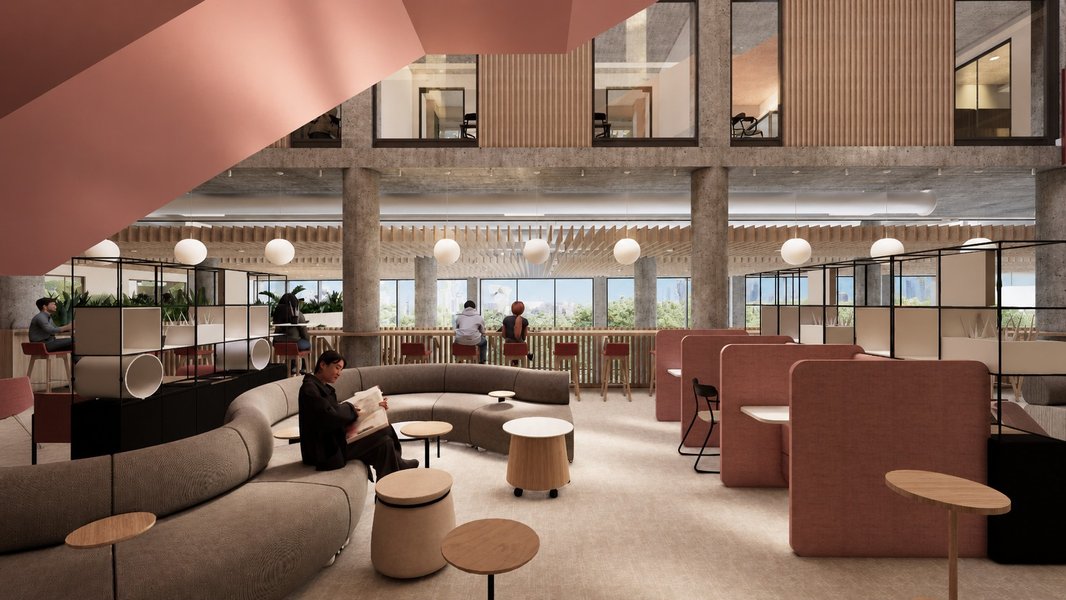
Designed by global architect BDP, the new business school building will provide flexible teaching and research space, with digital technology, sustainability and smart immersive technologies at the centre of the design. The aim is an inspiring environment that improves the student experience and graduate outcomes across the school’s subjects, which include business management, HR, supply chain and logistics, digital business, law, marketing, economics, and accounting and finance.
The Business School will be Morgan Sindall’s fourth project for the University. The firm delivered the £65m Science, Engineering and Environment (SEE) Building, a four-storey research and teaching facility with laboratories for physics, electrical engineering, electronics and composite materials, a wind tunnel and laser labs, used by students, academics and industry partners. It also built the £16m North of England Robotics Innovation Centre (NERIC), where small and medium-sized businesses can design, test and validate robotics and automation technologies with support from the University’s specialists. Morgan Sindall is currently building the University’s new acoustics research, testing and teaching facility, which is due to complete in mid-2027.
Steven Gregory, North West area director, Morgan Sindall Construction, said:
Salford is changing fast, and the University is at the heart of that change. The Business School will give students, local businesses and the community a place to learn, meet and develop ideas together, and we’re proud to be helping build it. We’ve delivered the SEE Building and NERIC, so we know this campus and what the University needs from its buildings. We’ve also been part of Salford for a long time. Our projects here bring jobs, training and work for local people and businesses, and we’ll make sure this one does the same as we help build a better future for the city.”
Professor Katy Mason, Pro Vice-Chancellor and Dean, Faculty of Social Sciences, Humanities and the Arts for People and the Economy, University of Salford, commented:
This is a significant milestone for both Salford Business School and the wider University. Our new home will create a vibrant, future-focused environment where students, colleagues and partners can come together to learn from each other, collaborate and generate new ways of growing our economy that deliver for society, while taking care of our planet.
With sustainability and our digitalising future at its heart, the new Business School building will offer innovative teaching and research spaces. Our investment will help us deliver an outstanding student experience, strengthen our connections with industry and ensure our graduates are equipped with the skills and confidence to thrive in a world that is changing at pace. It’s a significant step forward in our ambitions for the School and for the future of our University.”
Elsewhere on campus, plans to refurbish the Faraday building have been approved. Vacant for several years, it will be transformed into 3,500m² of high-quality, flexible workspace for the University’s professional services teams.
Charlie Alcroft, development manager at ECF, said:
The Business School is the next major step for Crescent Salford, following planning approval for Faraday and the progress being made on the acoustics laboratory. Bringing a new home for business education onto the Crescent will draw more students, businesses and visitors into this part of the city and help connect the campus with the communities around it.”
The new building sits within the £2.5bn, 240-acre Crescent Salford masterplan being delivered by ECF, Salford City Council and the University of Salford, and continues the University’s development along the A6, including the south side, home to the Old Fire Station Bakery and Brewery and the Faraday building.
ENDS
For further information, Chris Hulme 07971 350116 [email protected]