
A blog by Rich Smith
Sustainability Manager, Yorkshire
In construction, we're increasingly asked to demonstrate our environmental credentials and performance through targets, metrics and reporting.

Those measures are important. We find ourselves at a critical juncture, our environmental impact must reduce, and positive environmental interventions must become the norm - not a nice to have.
The issue is that improvements in sustainable performance are often not visible or immediately tangible. Carbon saved matters. Data matters. Evidence matters. But if we're honest, intangible numbers alone rarely inspire people. What inspires people is seeing the difference those numbers make in the real world.
That's why, at Morgan Sindall Construction, we've embedded approaches that don't just focus on reducing carbon emissions, but on creating meaningful, lasting benefits for the communities where we work.
The Project Carbon Award is one of the most powerful examples of that philosophy in action.
Turning carbon performance into community impact
If we are to tackle the climate issue holistically, we must positively impact other sustainability issues such as biodiversity, wellbeing, climate education and community engagement. The Project Carbon Award is a unique approach because it recognises that carbon - whilst critical - is only a part of our fight on climate change. The award directly recognises proactive carbon reduction, by rewarding performing projects with the resource needed to implement wider positive community, biodiversity and environmental outcomes in addition to our contracted scope. By doing this we can turn strong carbon reduction performance into a wider positive sustainability outcome.
How it works
Each year, projects across our regions are assessed on their commitment to carbon reduction, resource efficiency, innovation and environmental improvement. The highest-performing projects are recognised through the award, with funding from our carbon levy then reinvested into a community and biodiversity nature initiative.
In simple terms, teams that deliver outstanding environmental performance create opportunities to leave a lasting legacy in communities beyond the project itself.
The award also reflects one of the key strengths of our decentralised business model. It enables us to recognise teams that have gone above and beyond in reducing carbon at a local level, while reinvesting that success directly into the communities where they work.
This approach reflects a wider belief that sustainability shouldn't end at practical completion and that the environmental decisions we make during construction should continue delivering community nature value long after we've left site.
The tools and initiatives behind better decisions
Of course, meaningful outcomes begin with meaningful action.
One of the biggest challenges facing our industry is moving beyond good intentions and ensuring carbon reduction becomes part of day-to-day project decision-making.
That's why we've invested heavily in tools and initiatives that help our teams identify, robustly measure and deliver genuine carbon savings.
Our approach utilises CarboniCa, a third party certified whole-life carbon assessment tool, to model, understand, analyse, and compare carbon reduction decisions throughout a project's lifecycle.
By combining innovation, practical experience and robust carbon data, teams can confidently make more informed decisions notably during the design stage (where opportunities are greatest) to demonstrate measurable environmental improvements before a spade has even touched the ground.

Utilising CarboniCa has then allowed us to develop and implement our 10 Tonne Carbon Challenge initiative.
The challenge encourages our project teams, design consultants and supply chain partners to identify and implement opportunities that save at least 10 tonnes of carbon dioxide equivalent through alternative materials, improved methodologies or smarter construction solutions.
Since launching the challenge back in 2021, the business has collectively saved 71,490 tonnes of CO₂e.
Importantly, the challenge helps embed carbon thinking across projects, encouraging teams to continually ask:
"Is there a lower carbon way of doing this?"
The result is not simply lower carbon projects, but a culture where carbon reduction becomes a shared responsibility across project teams, design teams, consultants and supply chain partners. This collaborative approach strengthens understanding of the climate emergency and the relationship between construction activity and carbon emissions, creating a more informed industry that is better equipped to drive meaningful change.
Bradford College Future Technologies Centre: From carbon savings to community legacy
A great example of this approach can be seen at the Bradford College Future Technologies Centre project.
The project demonstrated exceptional commitment to carbon reduction through active participation in the 10 Tonne Carbon Challenge and the use of CarboniCa to identify and validate savings.
The team delivered a total carbon saving of 473 tonnes of CO₂e, with multiple carbon reduction initiatives achieving the thresholds required under the 10 Tonne Carbon Challenge.
Solutions included:
- A material change on the internal walls from blockwork to plasterboard stud walls, saving 57 tCO₂e (the equivalent to heating 21 UK homes annually).
- Rationalising the façade design by replacing aluminium PPC cladding with fibre cement cladding, saving 69 tCO₂e (the equivalent to heating 26 UK homes annually).
- Revising the piling specification to incorporate GGBS cement and local batching, saving 57 tCO₂e (the equivalent to heating 21 UK homes annually).
- Identifying an opportunity to use Electric Arc Furnace steel instead of Blast Furnace steel within the frame, saving 290 tCO₂e (the equivalent to heating 107 UK homes annually).
But what happened next is perhaps even more significant.
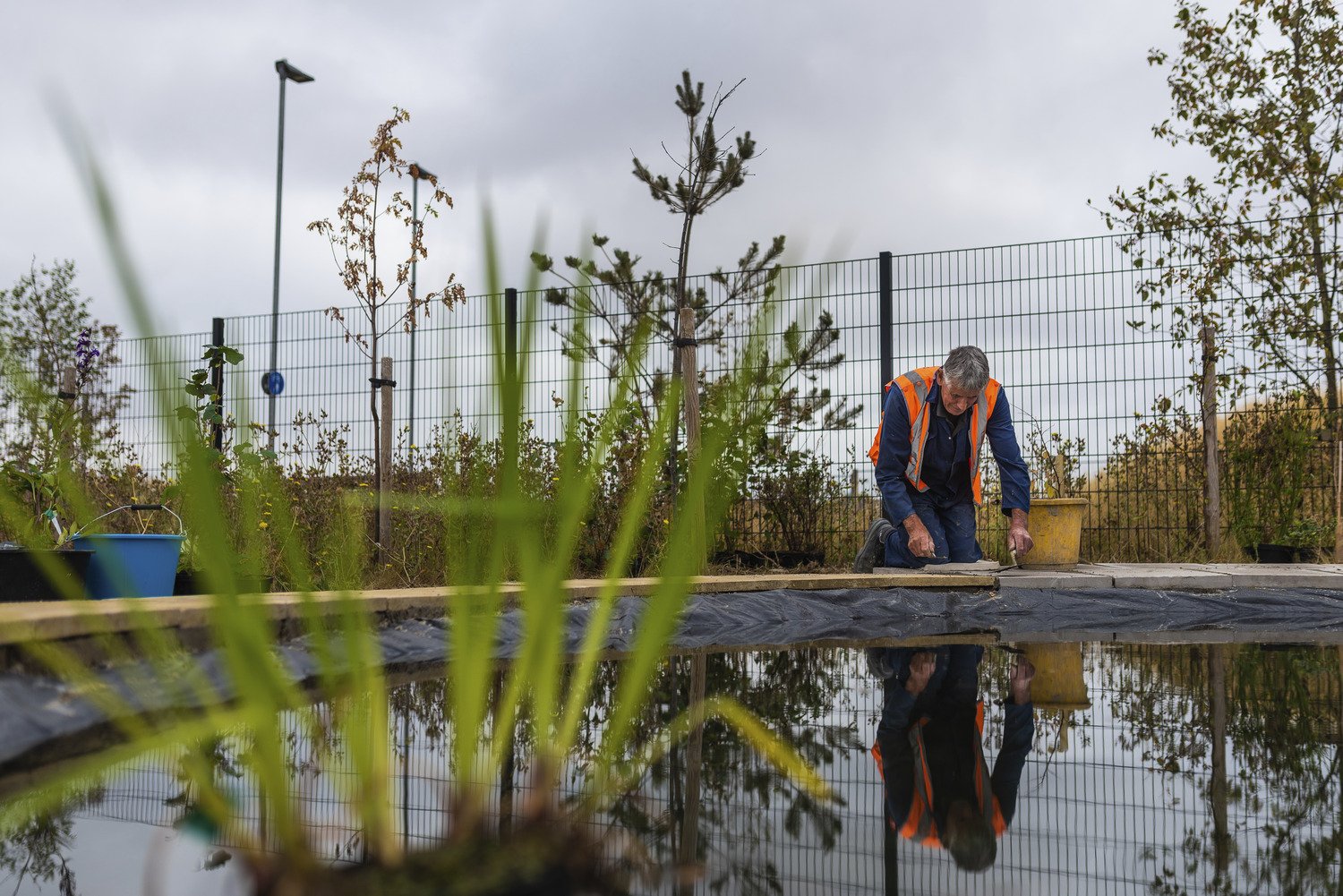
Through its environmental performance, the project secured £10,000 Project Carbon Award funding which was reinvested into an ambitious biodiversity and wellbeing initiative at Bradford College.
The result is the Garden Mills Biodiverse Communal Garden Project.


Reimagining an underused space
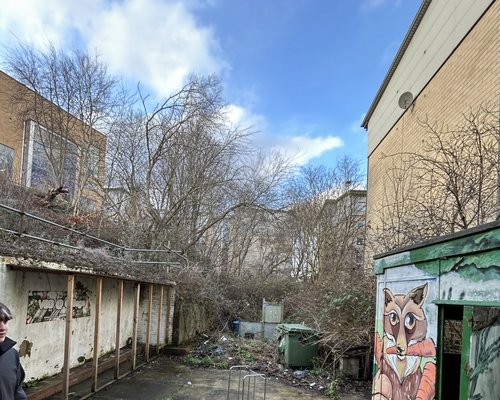
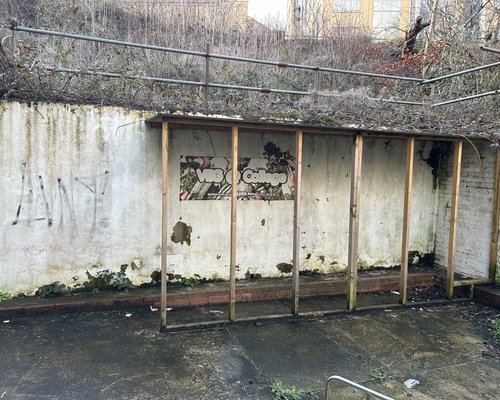
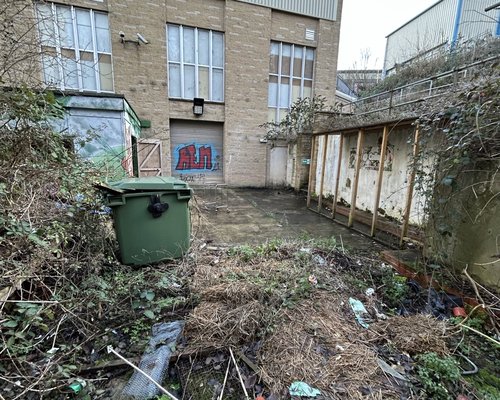
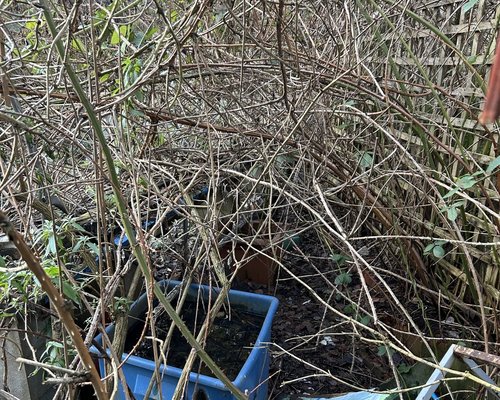
Located behind Garden Mills at Bradford College, the site was previously an underutilised area that had become vulnerable to anti-social behaviour and offered little value to students and staff, the wider community or local biodiversity.
Working collaboratively with delegates from Bradford College, Aire Rivers Trust (Friends of Bradford Beck) Bradford Metropolitan District Council, The Royal Horticultural Society, our local supply chain partners (Spencer Civil Engineering, AWS Landscapes, V&E Joiners, DJL Fencing and Marlborough Brickwork) and students, a vision emerged to transform the space into something entirely different.
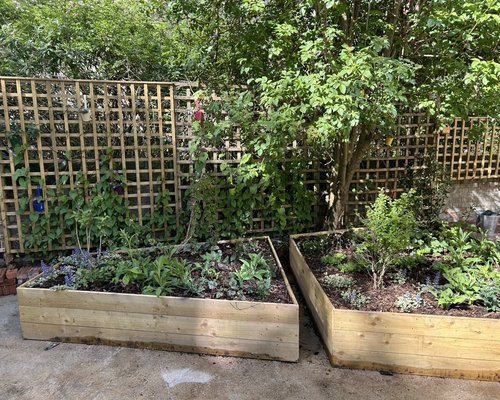
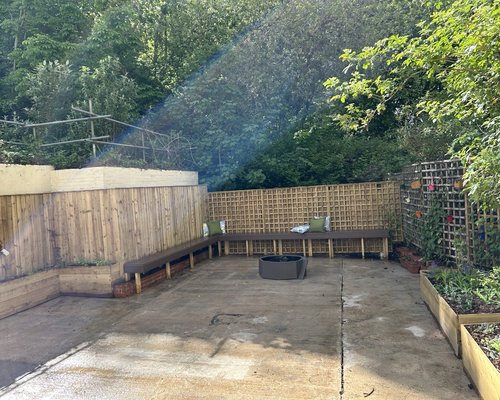
The aim was simple yet ambitious: create a welcoming low maintenance outdoor environment that supports biodiversity, enhances wellbeing and provides educational value for future generations.
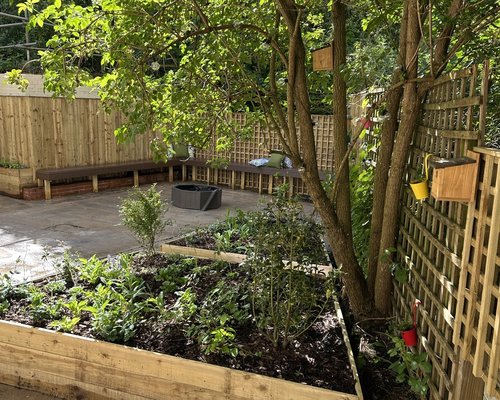
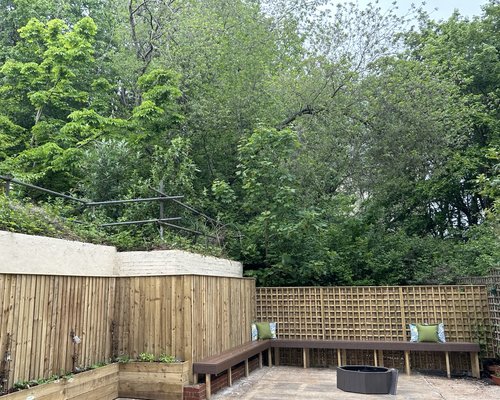
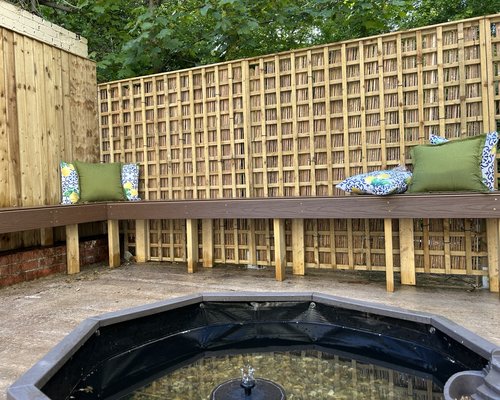
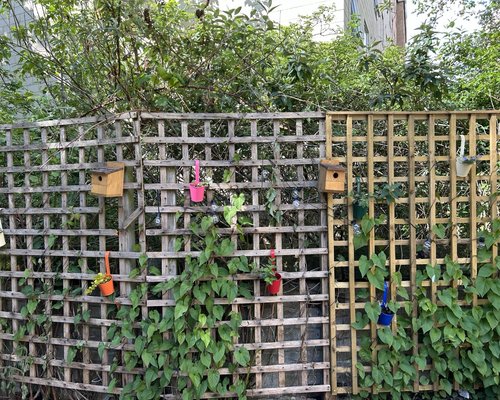
Today, the project is delivering:
- New habitats for wildlife and pollinators
- Increased biodiversity through carefully selected native planting, requiring minimal management and only rainwater irrigation
- Provision of bird and invertebrate boxes
- Connection to local heritage, history and biodiversity via informative notice board and Beck viewing platform
- Outdoor learning opportunities
- Improved access to nature
- Enhanced wellbeing for students and staff
- Greater awareness of sustainability and environmental stewardship
- Active project management experience for T-Level students
The project demonstrates how a carbon reduction initiative can have benefits far beyond the original construction project.
A carbon saving made on site has become a place where people can learn, connect, relax and engage with nature.
Building a more sustainable industry
Reducing carbon remains one of the biggest challenges facing the construction industry.
That's why we've developed tools such as CarboniCa and initiatives like the 10 Tonne Carbon Challenge to help our teams challenge conventional thinking, identify opportunities and deliver meaningful carbon reductions across our projects.
But through the Project Carbon Award, we're able to take those efforts one step further.
By recognising and rewarding teams that are going above and beyond in their sustainability efforts, we're able to turn environmental performance into something bigger, creating lasting benefits for communities and nature.
The transformation of Garden Mills is proof of that philosophy in action. What started as a series of carbon reduction initiatives on the Bradford Future Technologies Centre project ultimately created a thriving biodiverse space that will continue to support wellbeing, learning and wildlife for years to come.
For us, that's what great sustainability looks like: not just reducing emissions, but empowering our teams to think bigger, rewarding innovation and using environmental performance as a catalyst for lasting positive change.