
University of Salford’s new acoustics lab hits a high note as construction reaches topping out milestone
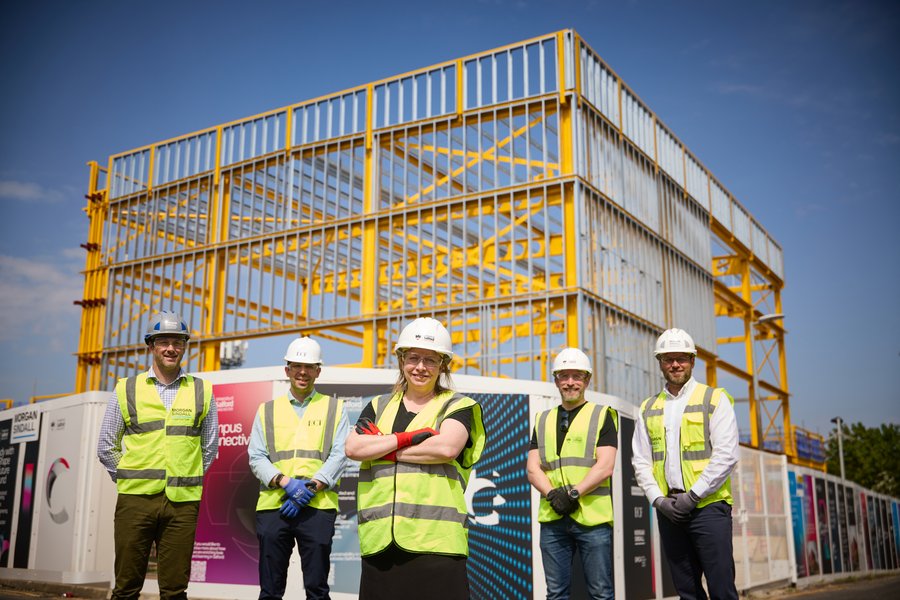
Morgan Sindall Construction has celebrated a major milestone at the University of Salford’s new acoustics research, testing and teaching facility, marking the topping out of the building as the project progresses well into its structural phase.
The ceremony marks a significant moment in the construction of the state-of-the-art facility, delivered under an £18 million contract. The new Acoustics Laboratory forms a centrepiece of Crescent Innovation, a regeneration partnership between Salford City Council, the University of Salford, and ECF (Muse, L&G, and Homes England) that will deliver over 1.7m sq ft of world-class research and business space. Completion of the new 14,000 sq ft acoustics laboratory is scheduled for mid-2027.
Timed to coincide with Noise Action Week (11–15 May), the UK’s national campaign highlighting noise as a serious public health issue, the facility reflects the growing urgency of acoustics research. The World Health Organisation identifies noise as the second most harmful environmental pollutant after air pollution, with long-term exposure linked to cardiovascular disease, sleep disturbance and cognitive impairment. The University of Salford has been at the forefront of this field for over 60 years, and the new facility represents its latest investment in that capability.
The University is already home to some of the quietest rooms in the world. Its anechoic chambers are specially engineered to absorb virtually all sound, making them capable of ultra-precise measurements, picking up sounds as faint as the hum of a computer fan or an insect crawling across the floor.
The new facility will expand on this capability, centred around a vast triple-height space with vibration-isolating foundations and extra dense concrete walls creating several idealised acoustic environments insulated from external noise. It will include a perception engineering sleep laboratory to understand how noise affects rest and recovery, a four-chamber Building Environment Testing Suite to measure how well modern construction materials protect people from external noise, and capacity to provide acoustic testing of anything from electric vehicles to loudspeaker stacks and emergency workers’ communications systems. The facility will also host the UK’s Designated Institute for Airborne Acoustics Metrology, making it the national reference point for how airborne sound is measured.
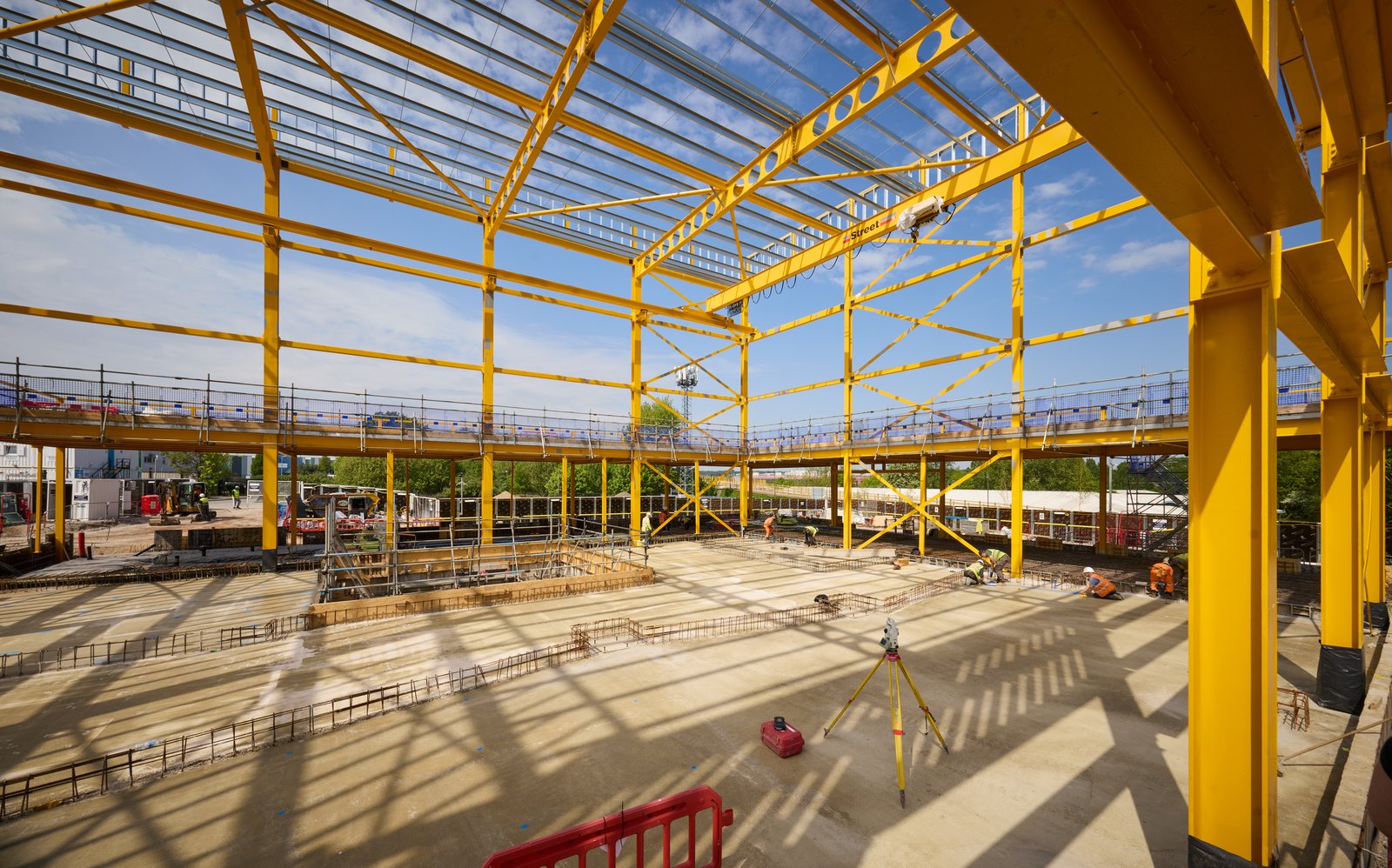
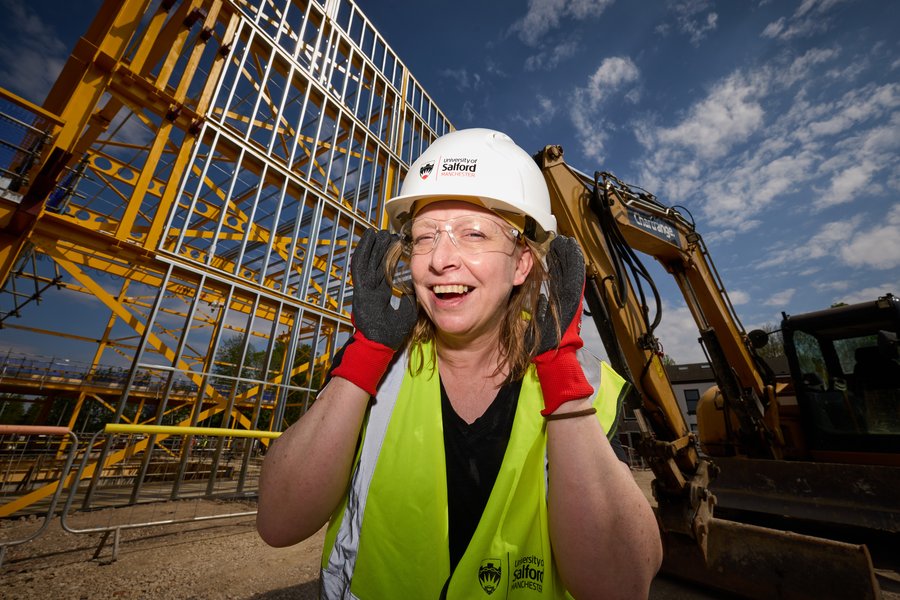
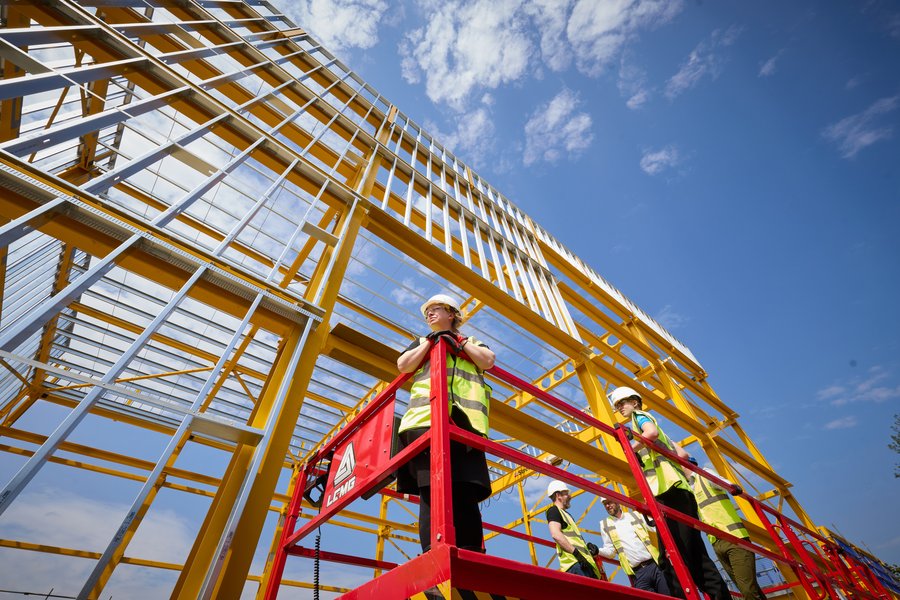
Since breaking ground in November 2025, Morgan Sindall has progressed through a substantial programme of enabling and substructure works. Ground remediation, piling and completing the foundations have taken place reaching the stage where the project is now with the steel frame erected, metal decking installed, the first-floor slab poured, and the gantry crane put in place.
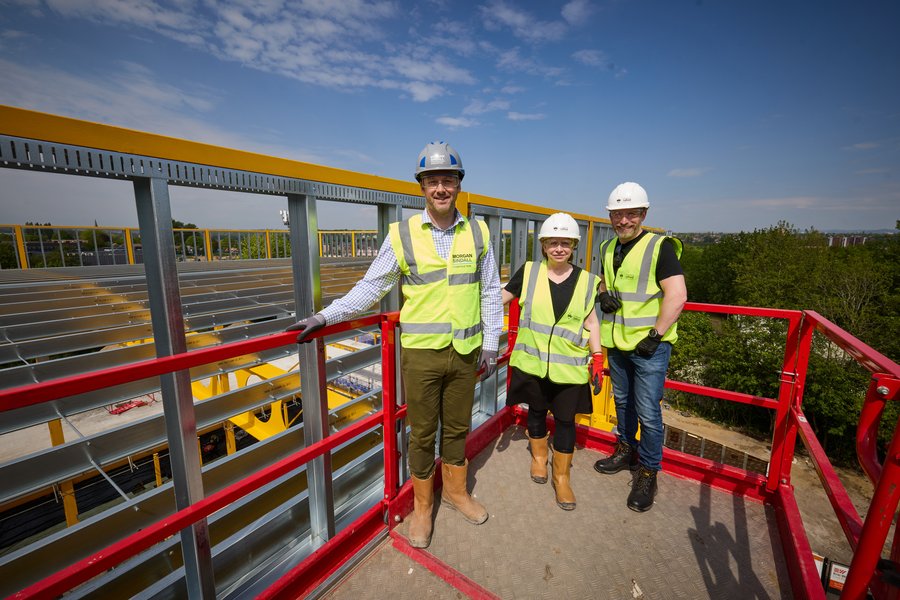
Claire Lomax, Acoustics Laboratory Director at the University of Salford said:
This is a one-of-a-kind building for the worldwide acoustics discipline, and it’s amazing to see our ideas beginning to become reality. It will offer a unique opportunity for acoustics research and industrial partnerships that will make a real difference to lives. We can’t wait to get the keys.”
Steven Gregory, North West area director, Morgan Sindall Construction, said:
Science and technology are a major driver of economic growth in the UK, and this remarkable building is a step change that will make a significant contribution to that capability. The project is also a testament to the University of Salford’s vision of building on the world-class strengths it already has in acoustics research, and we are very proud to be involved.”
Max Bentham director of development management at ECF, said:
The continued progress on the new acoustics building marks another significant step forward in the creation of Crescent Innovation - and a powerful demonstration of how our masterplan vision is becoming reality. This is where ambition meets delivery; a real building, taking shape on site, that embodies everything Crescent Salford is about: bringing industry and education together in world-class spaces. The 1.7 million sq ft of new commercial, academic and research floorspace we are creating will attract investment, create jobs and give local residents, students and businesses the tools to reach their full potential. We are collectively putting Salford firmly on the map as a city built for the future.”
Over the next six months, the Morgan Sindall team will complete the ground floors and excavate the specially designed pits that will house the acoustic testing chambers. The building will then be fully enclosed, with upper and lower roof levels installed alongside solar panels, external cladding, windows and ventilation louvres. Inside, a specialist acoustic contractor will lay floating floors mounted on acoustic bearings, a key technique for eliminating vibration, while the thick, heavy-walled chambers at the heart of the building will be constructed and sealed with solid concrete lids to create the ultra-controlled acoustic environments the facility requires.
The acoustics building represents the latest collaboration between the University and Morgan Sindall, which has also delivered the Science, Engineering and Environment Building (SEE Building) and the North of England Robotics Innovation Centre (NERIC) on the campus in recent years.
The site forms part of the University’s Campus Connectivity Plan (CCP) which is the major redevelopment of its research, teaching and public spaces. The University is a partner in the wider Crescent Salford Masterplan, along with Salford City Council and ECF. The Crescent Salford regeneration is a key project within Greater Manchester’s Central Growth Cluster – one of the city region’s six Growth Locations, where investment is being targeted to turbocharge growth.
In line with the latest sustainability standards, the new all-electric Acoustics Building will target a minimum BREEAM rating of ‘Excellent’, utilising low-energy and low-carbon technologies to minimise energy consumption and reduce the building’s carbon footprint.
ENDS
For further information, Chris Hulme 07971 350116 [email protected]