


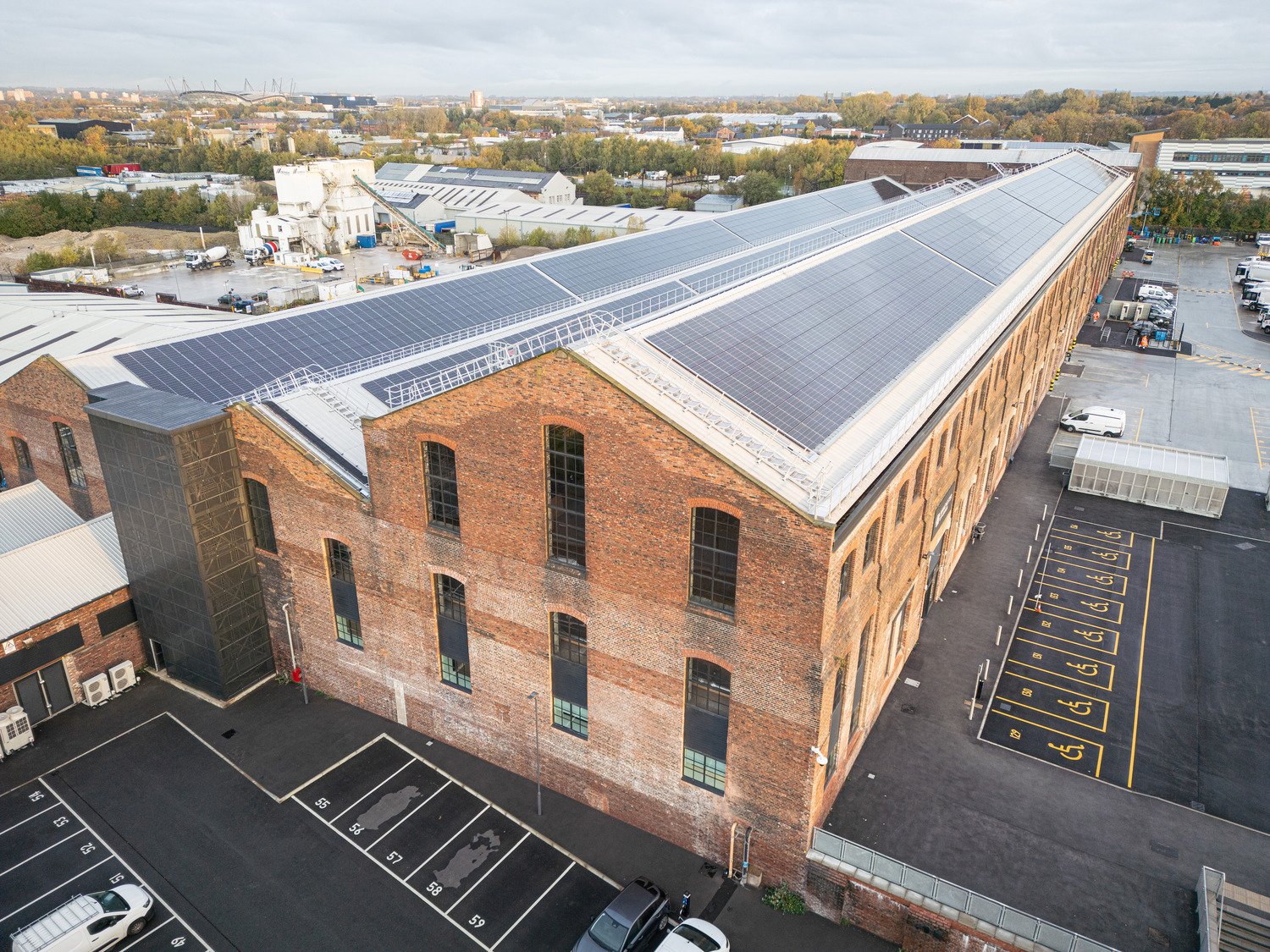
Hammerstone Road Depot
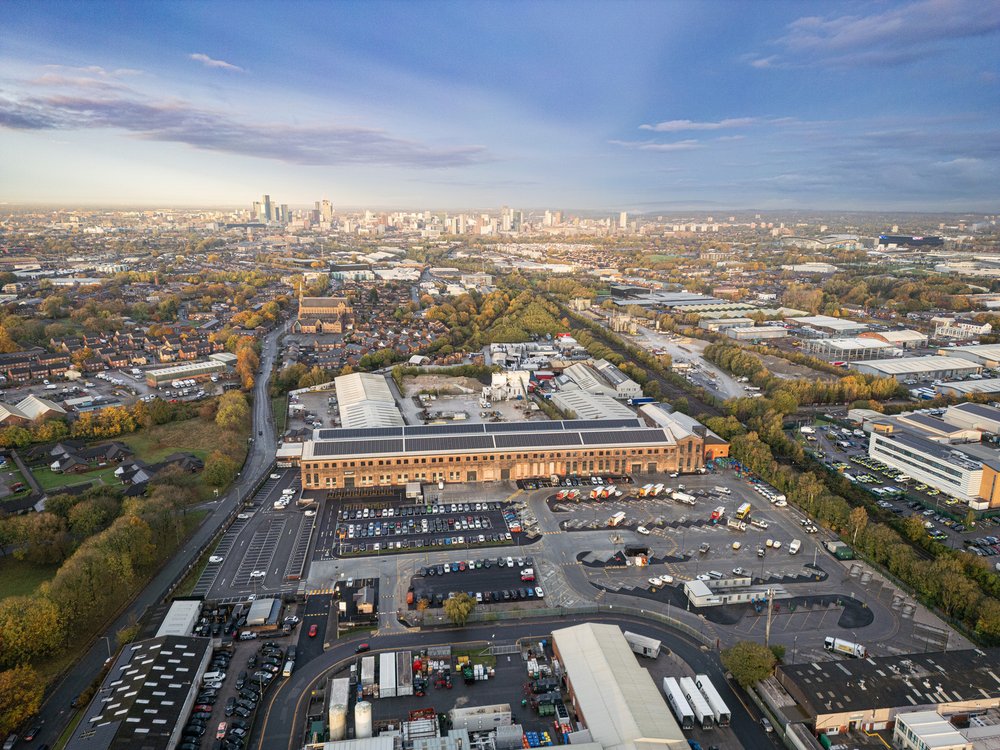
A complex refurbishment and retrofit project preserving Manchester's industrial heritage while creating a modern, sustainable municipal hub. Originally a mid-19th century locomotive shed for Beyer, Peacock & Co., the facility has been transformed into a multi-service depot supporting Manchester City Council's frontline operations, including waste management, Biffa waste services, bin wagon storage, and other essential council services.
Key Stats
- Refurbishment/Retrofit
- 13,000m3 GIFA
- Brickwork repairs and new roofing
- 2,000 solar panels
- Rainwater harvesting system
- Cathodic protection to preserve original steelwork
- Landscaping for refuse vehicles
- Office accommodation
At a Glance

Budget
£36.9m

Completion
October 2025

Location
Gorton, Manchester

Framework
North West Construction Hub

Sector
Industrial

Social value
£25m Social Value Portal

Sustainability
270t Carbon Saving
Background
Hammerstone Road Depot originated as a mid-19th century locomotive manufacturing facility for Beyer, Peacock & Co., one of Manchester's most significant industrial employers. Following the closure of the locomotive works in 1966, the building was converted to serve MCC’s waste and maintenance operations.
The site comprises a 13,000m³ industrial shed constructed from robust steel framing and traditional brickwork. Prior to intervention, the facility was in a state of significant deterioration following decades of intensive use. The steel frame showed signs of corrosion, the roof contained asbestos sheeting and offered poor thermal performance, and the building envelope was no longer weather-tight. Windows and building services were outdated, while the internal layout no longer met the requirements of a modern operational depot.
The ageing infrastructure was increasingly unable to support evolving council services, including the transition to low-emission vehicle fleets. Office accommodation, storage and workshop facilities were inadequate, energy performance was poor, and the building lacked the resilience and flexibility required for future operational needs.
Although not formally listed, the structure holds considerable industrial heritage value. Without intervention, continued deterioration risked the loss of an important historic asset. The challenge was therefore to modernise and decarbonise the building while maintaining live operations and preserving its historic character.
Today, the refurbished depot provides a modern hub supporting Council services including Facilities Management, pest control, COSHH management, polling services, trading standards and library support, alongside Biffa's refuse operation and fleet of 27 electric refuse vehicles, ensuring the long-term viability of this important Manchester asset.
Innovative retrofit solutions
The retrofit combined extensive fabric repairs, structural retention, services replacement and internal reconfiguration to transform the depot into a modern, high-performing facility.
A central intervention was the retention and protection of the existing steel structure, with approximately 700m³ of steelwork preserved. An innovative cathodic protection system uses low levels of electrical current to control the rusting of the existing steel columns, retaining their structural integrity and safeguarding the structure.
The roof was fully replaced, removing 330 tonnes of asbestos sheeting and installing a high - performance insulated system to improve weatherproofing and thermal efficiency. Extensive brickwork repairs were undertaken using traditional materials and techniques, preserving the building’s historic character.
A ‘box-in-box’ construction created modern, high-performance office accommodation within the original industrial shell, while maintaining the volume and integrity of the heritage structure.
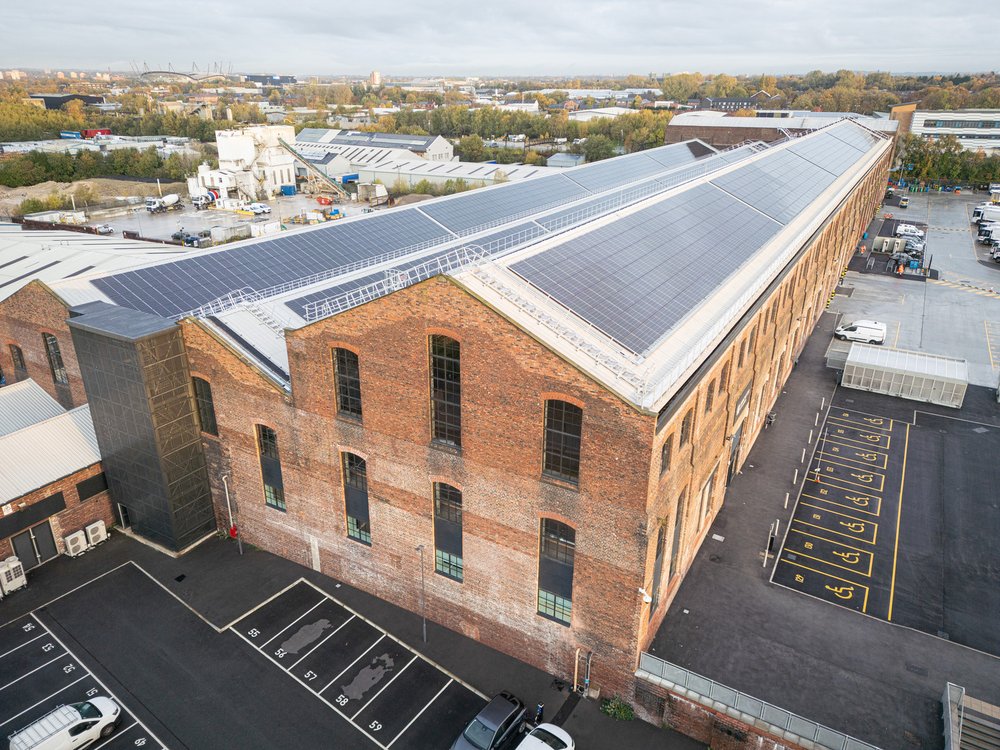
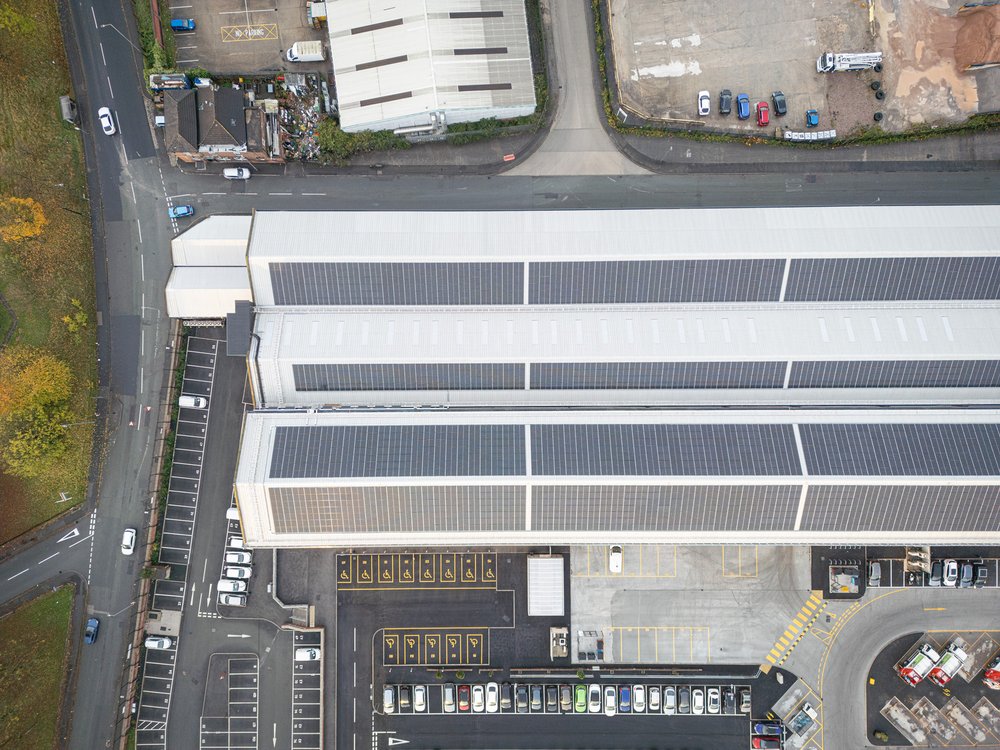
Building services were comprehensively upgraded, including a full electrical replacement and integration of renewable energy systems, notably a 2,000 panel rooftop solar array – the largest in Manchester - capable of meeting the facility’s energy demands.
A rainwater harvesting system was introduced, capturing and reusing water for vehicle washing operations, supported by smart controls to optimise efficiency.
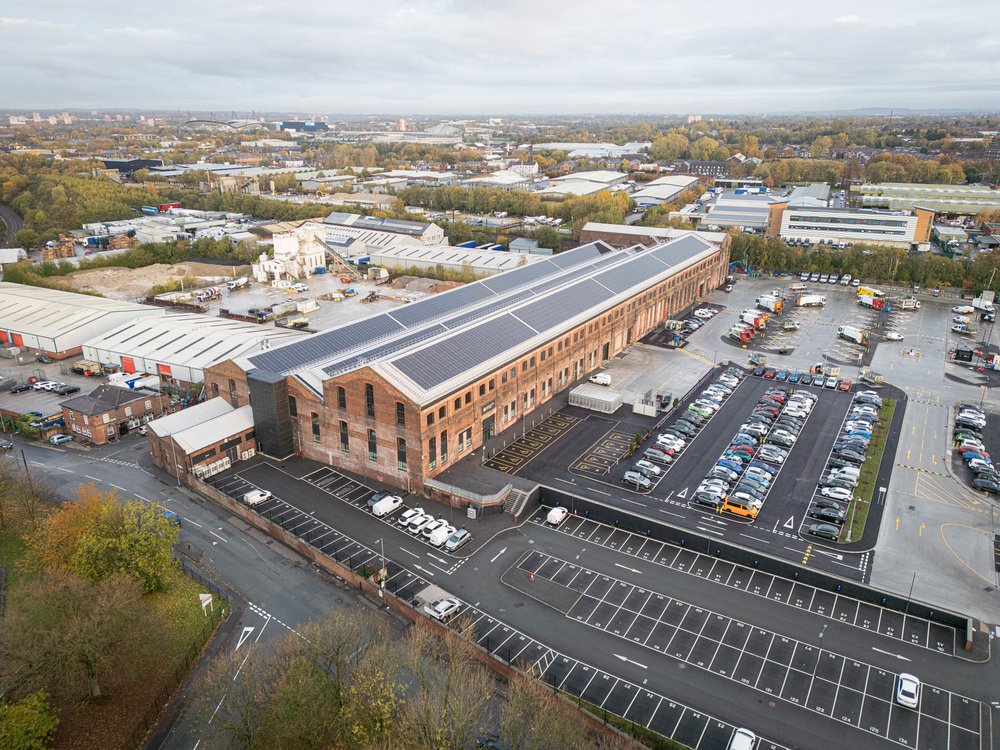
Externally, works included new drainage infrastructure, vehicle circulation routes, parking, EV - ready facilities, and a dedicated vehicle wash area, all delivered while maintaining live operations through phased construction.
"This landmark building looks like proud Manchester. We've repurposed a large building, so we've been able to save elements, which has saved us money, it's saved disruption and it's kept that pride. This was a complex project and there's been a lot of challenges and scope change, but we’ve stuck together and responded positively to everything and I'm proud of that.” Barney Harle, Head of Major Projects, MCC
A lasting legacy of social value
The scheme delivered more than £25 million in social value, representing a 68% return on investment, independently verified by the Social Value Portal. It created 1,168 full-time jobs, including 154 local roles, and delivered 1,038 apprentice and T-Level weeks, 47 weeks of student placements, and 192 hours of student engagement. Local businesses benefited through a supply chain that was 95% SME-based.
Circular economy initiatives further enhanced community benefit. An innovative partnership with EMR recycled 62 tonnes of steel, generating more than £7,000 for local environmental projects through City of Trees.
“It's not just bricks and mortar; everything we've asked for, we've got - apprenticeships, jobs, working with our schools and community groups. You've invested in skills, and heart, in the people of Gorton that'll leave a legacy - thank you for believing in Gorton's potential." Cllr Julie Reed, MCC
Gallery


Related News
NEWS
Knowledge Quad to deliver skills and training boost in Blackpool
Morgan Sindall Construction is bringing its award-winning Knowledge Quad to Blackpool, opening the facility on the site of the new Multiversity campus it is delivering in the heart of …
NEWS

Morgan Sindall Construction starts on site at Lydiate Primary School
Work has started on site at Lydiate Primary School in Sefton, where Morgan Sindall Construction is building a new school for pupils, staff and the wider Lydiate community on …
NEWS

Community Newsletter - Middlecross - August 2026
Click here to read the latest newsletter for the Middlecross Extra Care Scheme