


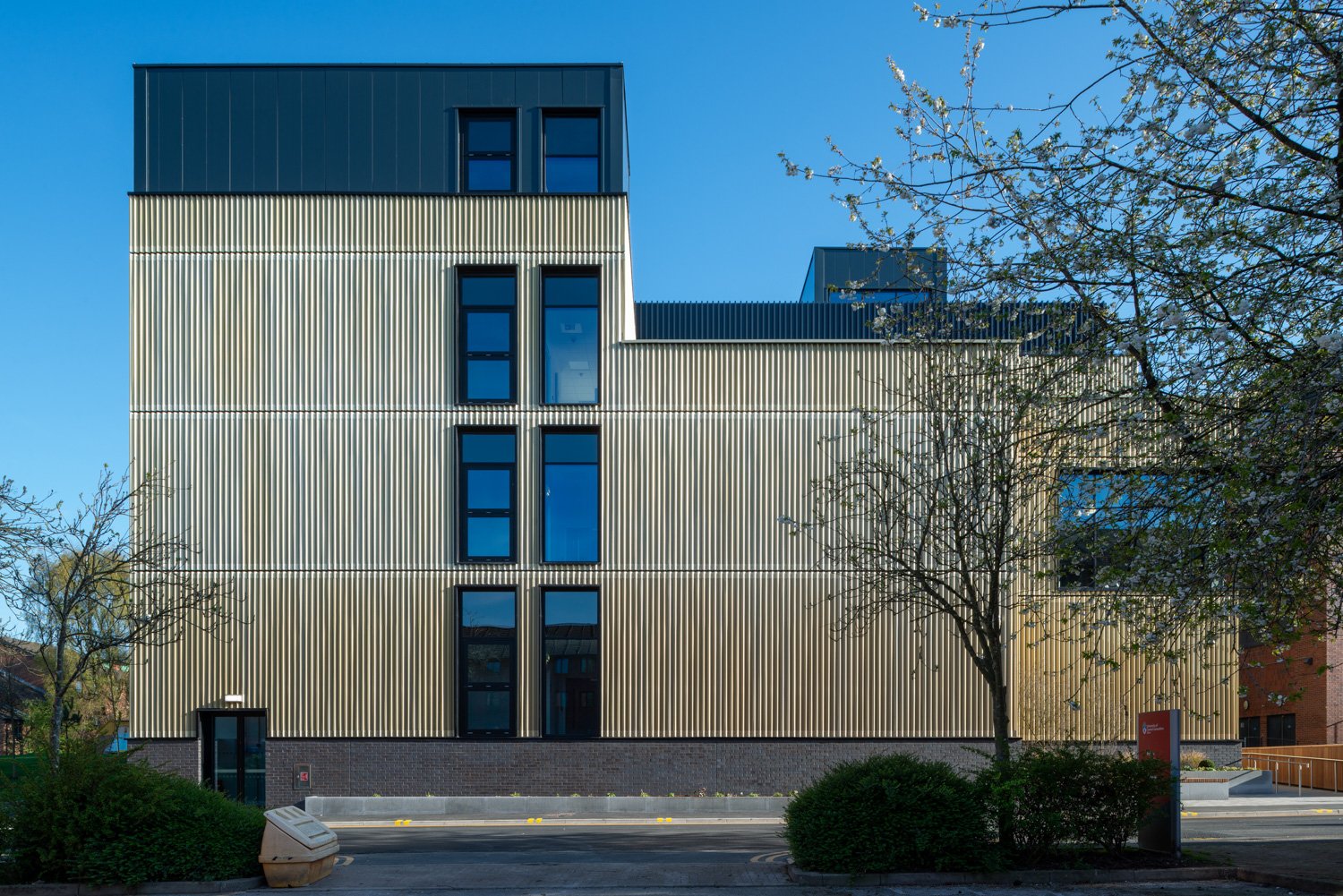
University of Lancashire School of Veterinary Medicine
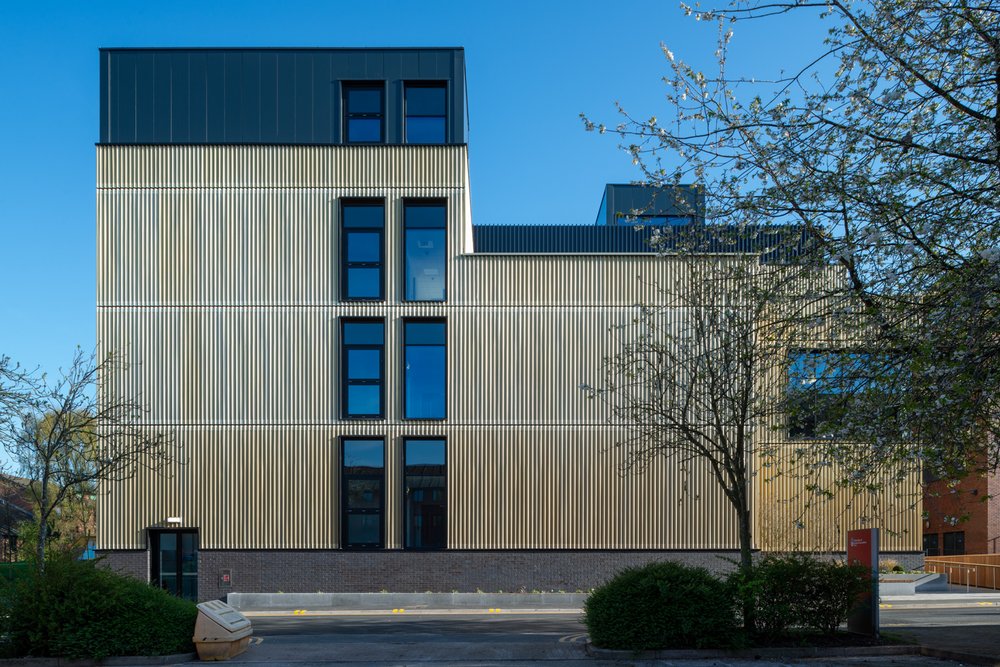
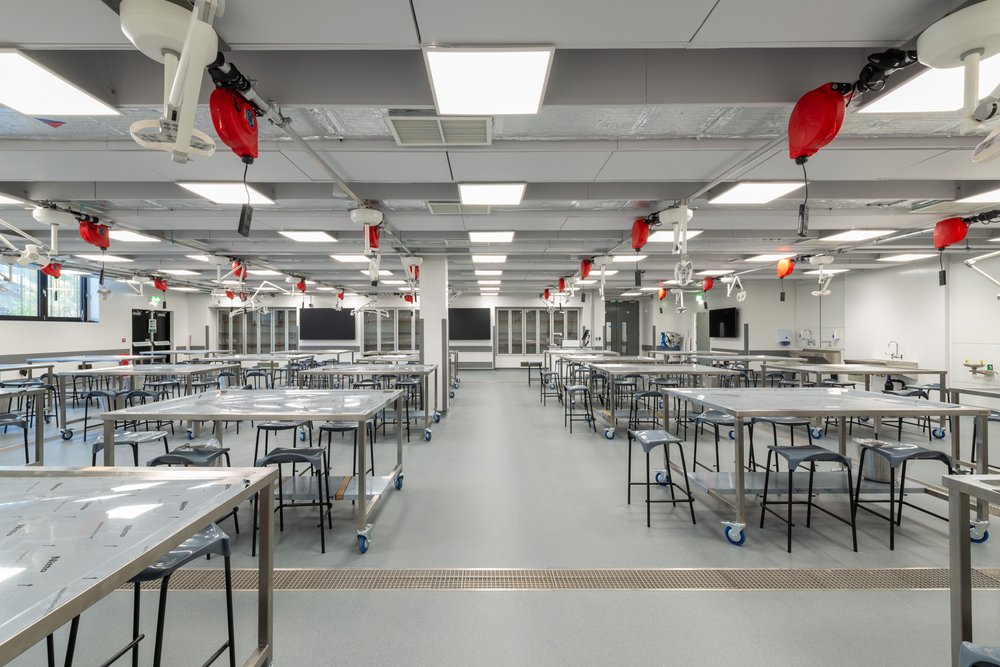
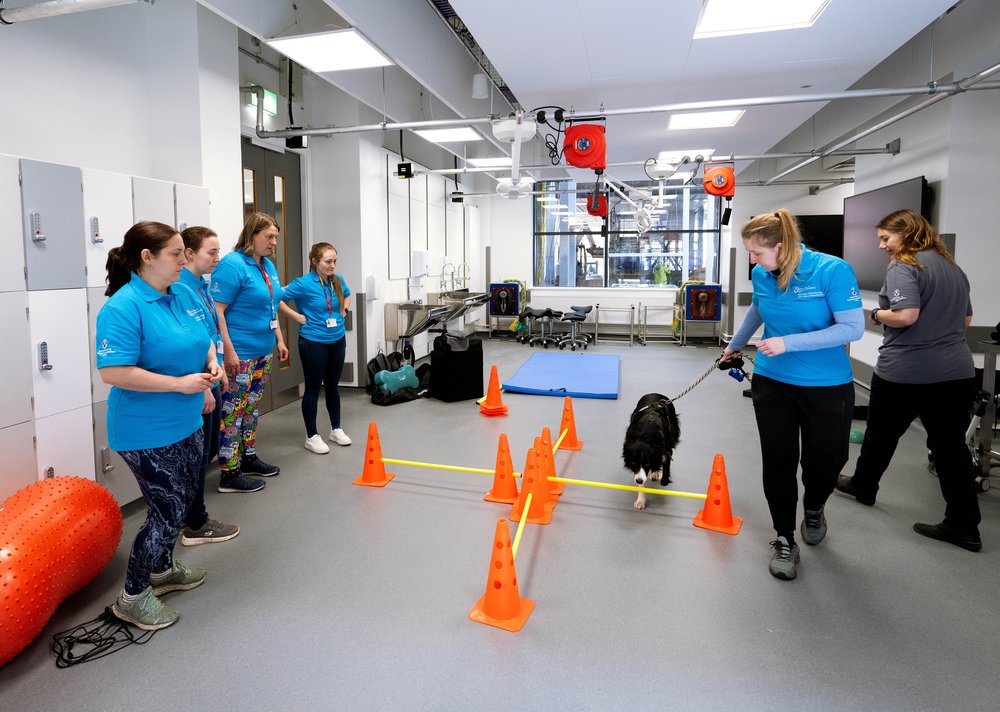
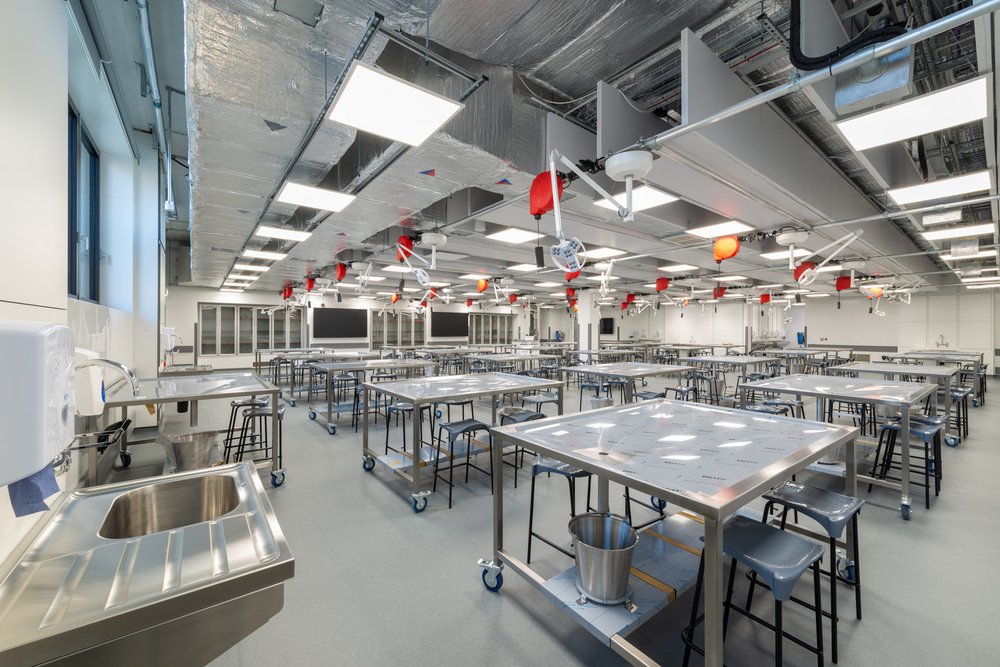
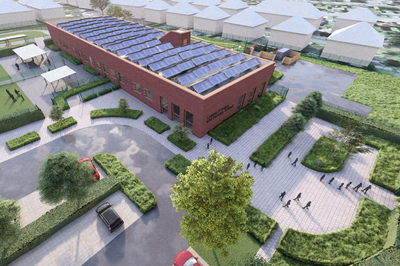
Lancashire’s first veterinary school, one of only 11 in the UK, addresses the national vet shortage through a purpose-built, high-spec facility. The new 3,800m² build spans multiple storeys and includes advanced anatomical, microscopy, and dental labs, alongside simulated clinical environments such as theatres, a pharmacy, and diagnostic suites. A further 960m² refurbishment delivers simulated theatres, a clinical skills zone, hydrotherapy pool for canine rehabilitation, and consultation rooms, creating a comprehensive, immersive training environment.
Key Stats
- New Build and Refurbishment
- 3/4 storeys, steel frame
- Live university environment
- BREEAM Excellent
- Wet and dry laboratories
- Simulated theatres, clinical skills facilities
- Diagnostic suite
- WINNER - CCS Gold Award 2025
- WINNER - Social Impact Award - Insider Lancashire Property Awards 2025
At a Glance

Budget
£28.4m

Completion
March 2025

Location
Preston, Lancashire

Framework
NHS SBS

Sector
Higher Education

Social value
£8.7m

Sustainability
360t Carbon Reduction
Overview
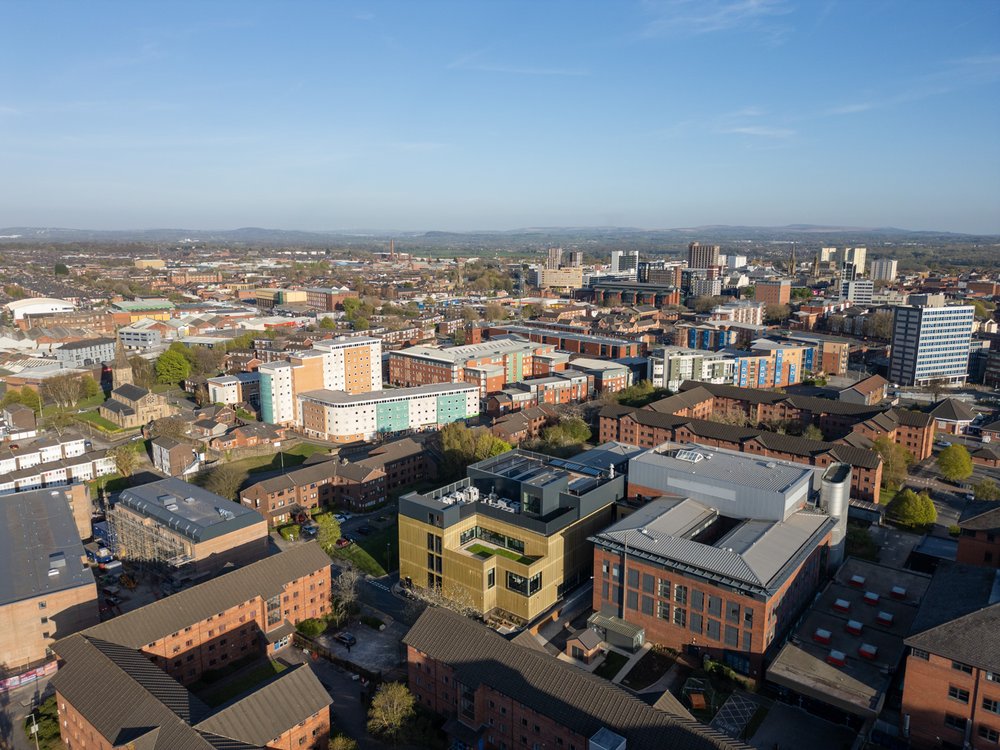
The School of Veterinary Medicine is a state-of-the-art facility for the University of Lancashire (formerly UCLan) combining a new-build extension and refurbishment of the existing Greenbank Building in Preston. As Lancashire’s first veterinary school, the scheme is a landmark development with local, national, and international significance.
The new build spans 3,800m² across three storeys and incorporates high-spec wet and dry laboratories, a cadaver preparation suite, microscopy and dissection labs, a mock veterinary practice open to the public, seminar rooms, and immersive collaboration spaces. The 960m² refurbishment includes simulated theatres, a clinical skills zone, a hydrotherapy pool for canine rehabilitation, and mock consultation rooms.
innovative sustainable design for complex spaces
Key to the project’s innovation was our delivery of complex functional spaces not commonly found in higher education builds – including infection-controlled environments, specialist ventilation systems, and bespoke cadaver delivery and storage facilities.
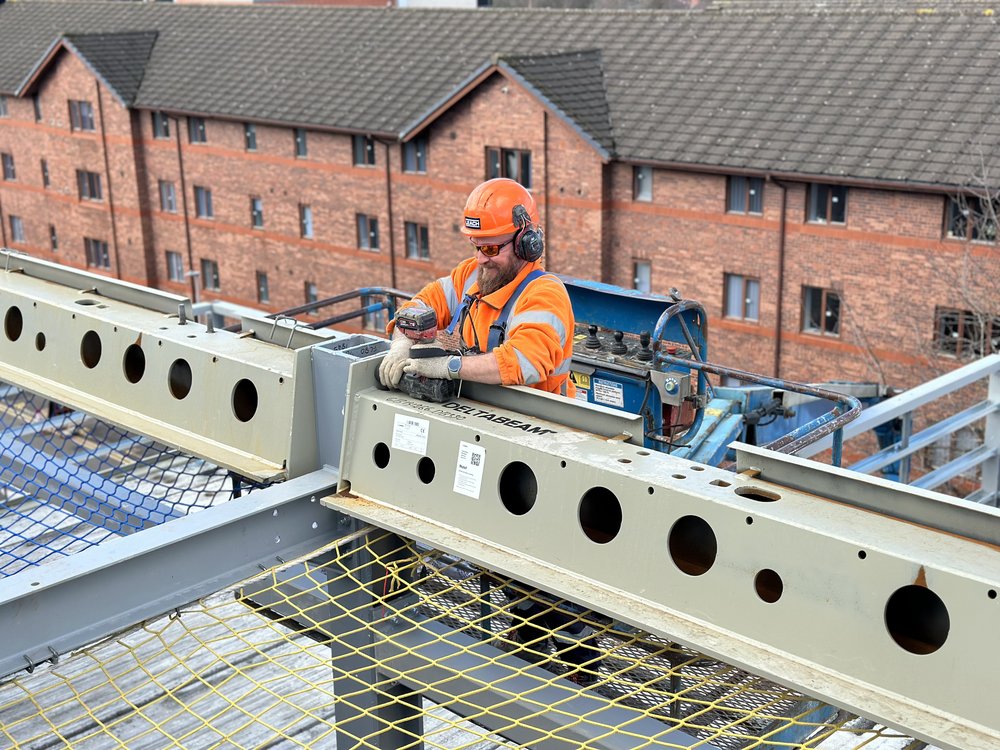
The use of Peikko delta beams - an innovative slim-floor structural solution (pictured) within the steel frame construction enabled the creation of large, column-free spaces ideal for open plan teaching areas, laboratories, and flexible learning environments.
Designed to BREEAM Excellent, the development integrates sustainable features such as green roofs, PV panels, low-carbon materials, lifecycle planning aligned with BREEAM, and intelligent design saving over 360 tonnes of CO2 emissions.
Creating a Lasting Legacy
Social value was embedded throughout delivery, generating over £8.7m verified socio-economic value. Our approach focused on creating education, employment and community benefits closely aligned to local priorities. It was measured and verified via Social Value Portal, ensuring transparent, evidence‑based outcomes.
Education and skills were a core theme. The project delivered 509 apprenticeship weeks, 307 NVQ weeks, 39 internship weeks, and over 150 hours of student engagement. The scheme also supported ULan students directly, including a placement year for a civil engineering student.
We also worked extensively with local schools, delivering assemblies, hosting nursery and reception site tours and running a Year 6 engineering challenge to inspire early interest in STEM and construction careers.
Employment outcomes were significant. Working closely with our supply chain and partners such as We Are Footprint, we created roles for short/long‑term unemployed people, NEETs, care leavers, ex‑offenders and disabled workers.
Local economic benefit was strengthened through £9.2m spend with local MSMEs, supply chain engagement of 415 local employees, and VCSE procurement.
Community impact was delivered through 127 volunteer hours and nearly £10k donated to local initiatives. We piloted a six‑week DIY course with Lancashire Women, equipping vulnerable women with practical home‑maintenance skills, improving confidence, and enhancing the charity’s centre through redecoration and furniture installation. We also partnered with EMR Metal Recycling, raising £1,566 for the Lancashire SAFE Centre through reclaimed metal donations.
Gallery


Related News
NEWS
Knowledge Quad to deliver skills and training boost in Blackpool
Morgan Sindall Construction is bringing its award-winning Knowledge Quad to Blackpool, opening the facility on the site of the new Multiversity campus it is delivering in the heart of …
NEWS
Morgan Sindall Construction starts on site at Lydiate Primary School
Work has started on site at Lydiate Primary School in Sefton, where Morgan Sindall Construction is building a new school for pupils, staff and the wider Lydiate community on …
NEWS

Community Newsletter - Middlecross - August 2026
Click here to read the latest newsletter for the Middlecross Extra Care Scheme